Saturday, September 28, 2019

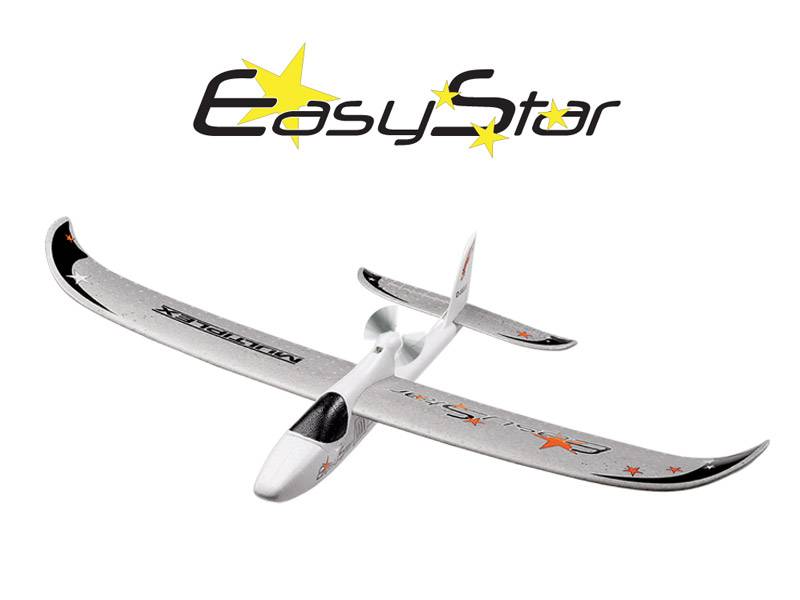
Multiplex Easy Star

Image result for multiplex easy star
Multiplex Easy Star 1


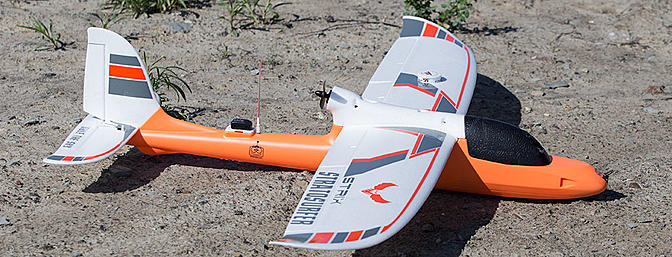
The Bixler line, the Sky Surfer, Volantex Ranger line, and Finwing Penguin and Sabre all have something in common. They are mid-fuselage pusher planes.  But, who started this branch of excellence in RC flying?  The Germans. The Multiplex Easy Star to be exact.  It's just a bit smaller than the Bixler 1/1.1/1.1 v2


A different concept


Image result for radian plane
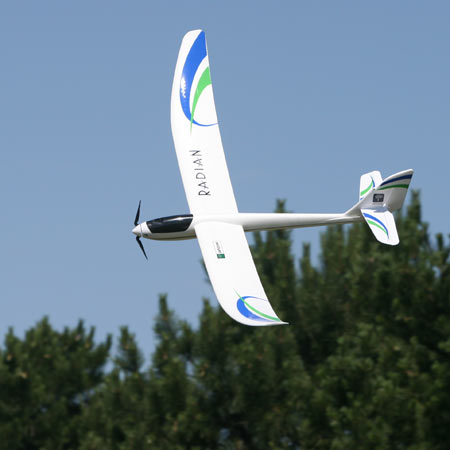
Efkute Radian is a similar concept, the prop is upfront

The Easy Star is a foam trainer with extra rigid wings. The wings feel a bit more like EPP than EPO foam.   Thus it's durable.  It was designed for new pilots, a type of trainer where the prop is not at the front or back of the plane and thus less likely to get damaged.    And, it's only 3 channel.   It has elevators but no ailerons.  It steers by the rudder.  The dihedrals in the wings help keep it stabilized.   It's the basic concept of the Horizon Hobby Radian.  The Radian is two meters and has a prop upfront, but other than that, they are similar.

The joy of floating


I can't explain floating to people.  You either enjoy watching a plane fly Line of Sight (LOS) and floating on the air currents, or you don't.   I find that it's like Indian food, you either simply love it, or you avoid it.   If you love it you seek out planes that can float well,  this is one of them.

Rebuilt with left-overs
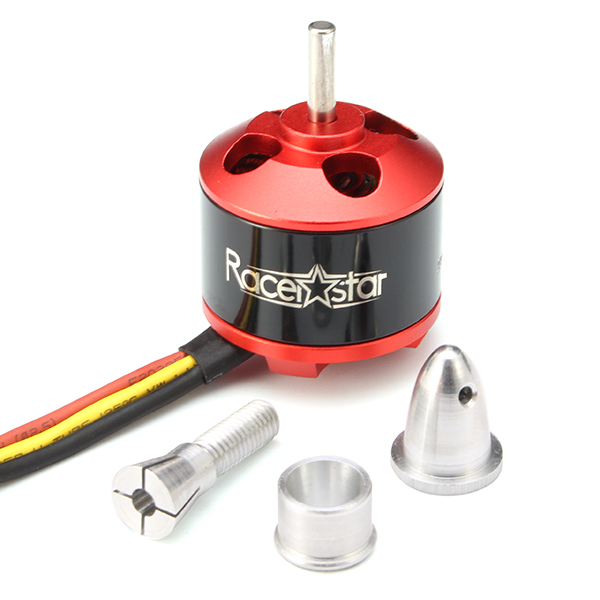

Image result for Racerstar BR2212 2200
I used the Racerstar  BR2212 2200KV motor
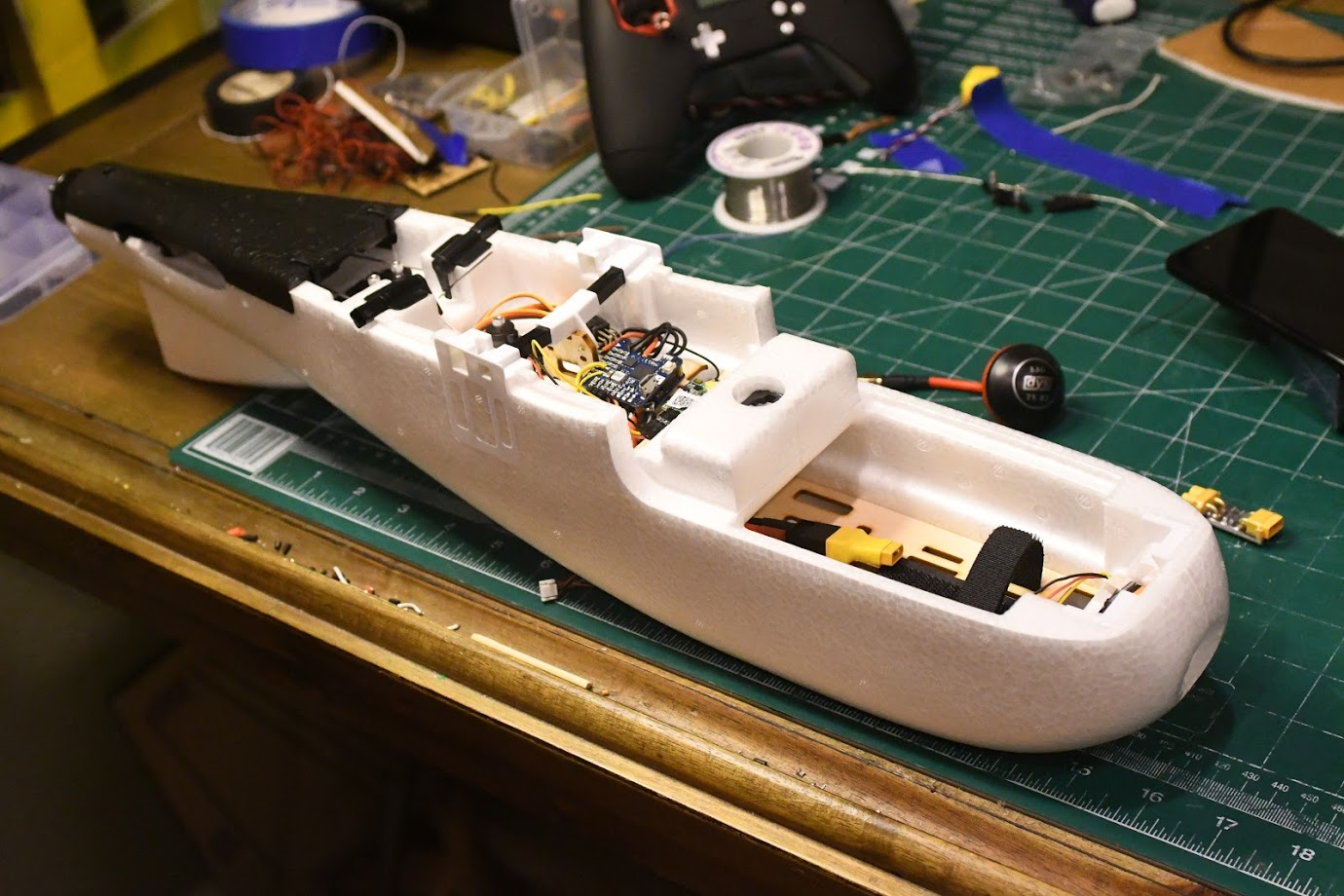
I found this plane for sale used.  Someone had pulled out the stock brushed motor that came with the plane back in the era where brushed motors were a thing.  He was going to put a brushless motor in it but didn't get around to it.  I just finished the plan.  The plane was rebuilt with stuff I literally had laying around.


Motor:  Racerstar BR2212 2200 -  I believe this is similar to the DYS D2826/6 2200KV motor.   I think the original motor may be around 30g heavier.  With a 6" prop it's plenty powerful.  The motor is only 2S and 3S. Honestly, the plane flies great on 2S

ESC:  Skywalker 20A-  The motor tops out at 21 amps.   So, technically, the speed controller should be around 25A.   If I were going to weigh down the nose and fly this plane at full throttle all the time on 3S then yes, it would get the proper speed controller.  But, that's not what I am doing.

I found a motor mount from the Bixler 2 that I wasn't using, That seemed to be a bit too large, but I made it work.  It wasn't pretty but I sent her anyway.

The maiden


The first flight was with 2S.  Not only that, but it was at 1/3rd power the majority of the flight. Needless to say that it doesn't take much to make this plane fly.   It floated like crazy. It's simple yet stunning to fly.  It just floats about the air currents which is both simple and relaxing.


Old School still works


Image result for double double

Something off-topic but does drive the point home is 'In & Out Burger.'   For those who don't know, In & Out Burger is a Southern California institution.  It offers a couple different burgers, shakes, fries and a few drinks. That's it.    The most famous burger, the 'Double Double' is essentially two beef patties.  There really isn't much to the burger, it's nothing you wouldn't find elsewhere. Meat, cheese, onions, buns, etc.  Though there are variations of the burger that can be ordered (such as Animal Style) there are no "Southwestern Double Double" nor "Chipolte Double Double"  nor "Monterey Double Double." 

Don't try and fix perfection!

As an experiment, we took these delicious burgers home and added avocado and bacon to it.  So, what was learned with our experiment? It's simply the economic term "The Law of diminishing returns" in action. The avocado was nice, but not needed, and for whatever reason, I couldn't really taste the bacon.   You see this same thing happen when beautiful gals go a bit too far with playing with their hairstyles. Sometimes it's counter-productive. 

The Easy Star is the same thing, it just works, and it's beautiful as it is. There is no need to fix perfection.

The Easy Star, the plane that started the sensation


I can easily hack the wings and drop in ailerons and flaps if needed.   I can put a flight controller in it, as well as a camera, VTX and GPS.  I can make this a full INAV plane.   And yet, I won't.   Why? I mean, this is what I do.  I look for odd planes to put INAV into, and this would be a perfect fit.   The reason why this plane works is because it's light and simple. Once I start weighing it down with gear, it's a small Bixler, and perhaps not as good as a Bixler.   For around $45 US you can buy the SkySurfer any day of the week from Banggood. It's an EPO Chinese knock off of the Easy Star,II and a much better plane to hack and improve upon.   The Skysurfer has ailerons.  The Easy Star did capture lightning in a bottle with the original concept. The only issue was that it came out at a time before brushless motors were popular.   The brushless motor upgrade makes it fly even longer.

Multiplex blinks


The Easy Star II has five channels with the addition of ailerons.   So, I will say this as a guy who owns a Bixler 1.1, 2, and Sky Surfer.  The original Easy Star is perfect.  Like the Radian, the rudder is all you really need to turn the plane.  Sometimes, less is more. Unless an Easy Star II falls into my lap I wouldn't spend the extra money on it when I could have a Bixler 2.  If you would like to add things to the Easy Star such as more servos and FPV, it's far, far better to buy a Bixler 2 or Bixler 3 and start from there.  Why?  Both planes are larger than the Easy Star and can take the weight a lot easier.
RC plane


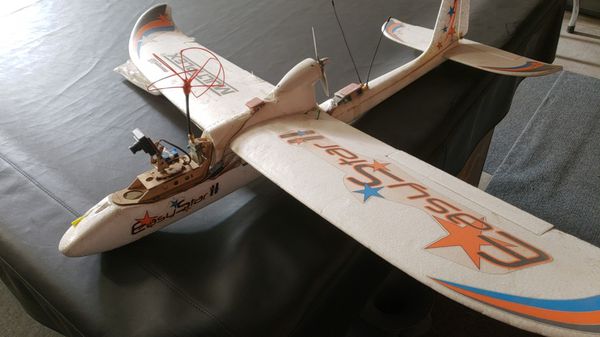
This plane has been for sale for the last year.   It's the Easy Star II with FPV already added to it. The ad claims it has a flight controller.  It has a long-range VTX in it. So, why is it for sale?   Without flying it, I would guess that the plane is heavy and it doesn't take long before the battery voltage is depleted.   Had this gear gone into a Bixler 2 or 3 it would float better, and take larger batteries.


Update:  Motor mount and new motor.  I wrote to Terry at SmallPartsCNC.com and asked him to find me a mount for the Easy Star 1.  Keep in mind this plane hasn't been made in a very long time and thus the demand for the mounts are gone.  But, he found one. This allowed me to put on a one inch larger propeller.   So, this is what I did.

Racerstar BR2208 1400KV 2-4S Brushless Motor N Gauge Train Passengers RC Models
I put on the Racerstar 2208 1400KV motor.  It's around 13g lighter.  Then I put on a Master Airscrew 7x3 prop.   I sent the plane out for a flight at 6 AM.  The old 2200 motor  was loud and I wouldn't ever think of sending it that early when people are sleeping.  But, this plane was so quiet that it didn't matter. 

This flight was with a 3S 1500mAh battery and lasted 40 minutes.  It floated effortlessly in the sky.   And yes, I probably could have put in a 3S 2200mAh  battery ahd let it float around in the sky for an hour. 

Did we leave something behind?

There is a simplicity and honesty to the Easy Star that got lost in translation when these planes went from Germany to China.   Yes, you can still buy the Easy Star 2, but it's not the same thing. Perhaps it's like talking about LP vinyl albums.  There was a time that you would put on the Beatles Abby Road album on your record player and listen to it. Then you would have to get up and go flip the album over and listen to the other side.  You would often listen to the entire album and see how it was structured.  Now you'll hear "Something" from that album mixed in with other songs from other artists as they are streamed. It's not the same.

 For around $45 you can get the Sky Surfer from Banggood and leave off the servos on the ailerons and perhaps get a plane that's 95%  as good.   Therefore, I am not saying that you should search high and low for this plane.  But, just the same, it's about as enjoyable as listening to the Beatles Abby Road album.

Wednesday, September 4, 2019

5 things I've learned about the Bixler 2


As the administrator for the INAV Fixed Wing Group (Facebook) we get people of all skill levels coming to the group. Often we get guys who come to us from quads who want more range and longer flight times. It’s not surprising that people’s next quad is often their first plane. The topic comes up of what would be a good INAV plane. Planes such as the Reptile S800 and Sonicmodell AR Wing (900) often come up first because of their ease of use. I like flying wings because they are easy to repair after a good crash or two, or 10. But, many suggest that a good 5 channel plane is what’s best. The name “Bixler” comes up, again and again. This is surprising because the plane is has been out for at least the past seven years. It’s still beloved and still a favorite of many. These are the top five things I’ve learned about the plane.

1) Glider with trainer capabilities- The word “trainer” more or less means “useless” once you learn how to fly. Trainers often go in the corner of the garage, rarely if ever used again. The Bixler 2 is easy to fly and would be a good plane for a first plane. The good news is that you won’t grow tired of it and want to retire it. With glide characteristics like the Horizon Hobby Radian, the Bixler 2 is a plane you’ll enjoy for a long time.


2) Highly stable, but not a speed demon. One of the reasons why it’s so loved is because it can fly smooth and stable even in less than ideal conditions. Some people like stable fliers and others can’t stand them. The Bixler 2 will help you discover the airspace, and drift on wind currents and help you find thermals. The swept up wings make it less than ideal for being a fast flier. The STRIX Stratosurfer is similar to the Bixler 2 with flat wings so that you can get the speed you desire. It also has an injection molded plastic fuselage so it’s very durable,


3) Version 2 has flaps


This is the original Bixler 2.


I didn’t care for the graphics of the original Bixler 2. The newer graphics are a lot more appealing The real change is that the Bixler 2 now has flaps. I have this plane as a LOS flyer for my first plane, and I didn’t use the flaps. I can say that I’ve never wished for flaps when landing. However, I could really use them for taking off.


Flaps can also help for slowing the plane down for catching thermals. At 1500mm the Bixler 2 is a great size for riding thermals. I once got the plane stuck in a thermal and I was barely able to get it down before it floated up to the stratosphere. My thinking now is that catching thermals is fun, but I would like to do this FPV in case this ever happens again. Flaps can also slow the Bixler 2 down for a landing. The 2 is more prone to take its sweet time landing and I can see how having flaps can get it back down safely when it needs to come down quickly.

The flaps are on hinges whereas the ailerons aren’t. Strange, right?


4. Launching is an art.


Mid-fuselage pusher planes like the Bixler and the Volantex Ranger are notorious for dipping under heavy throttle. This means as the Bixler takes off the plane will want to push itself into the ground. The , unfortunately, the result is a lot of failed launches when you're not launching into a mild breeze. For this reason alone I find the Bixler is less than ideal as a trainer. It's a great plane if someone who is experienced can launch it for a new pilot. I find the solution for a good takeoff is a short run with a level launch at around half throttle. This works well 95% of the time. I usually have my hand on the nose so the plane is less likely to pitch when I let go of it.


5 ) Buy the kit- If you're not one to spend your weekends with a bottle of glue and a set of build instructions then the PNP is for you. If you're not afraid to get your hands dirty, by all means, buy the kit. Throw in actual metal gear servos and spend time thinking about which motor to purchase. If this is a plane you’ll hopefully be flying around for at least the next few years then you’ll want to outfit it with good stuff. In my book, motors are a subjective thing. You can run with a strong Sunnysky X2216 motor if you like, or you can get by with one for half the price. I figure if you don’t dig your motor you can always upgrade it when you’re itching for a change. The plane does a lot of floating so you don’t really need an outrageous motor unless you’re loading it up with excessive gear and weight. If you’re coming back from flights and your motor is always hot a change may be needed sooner than later. Though you may not go top shelf first, make certain that the motor offers enough thrust to fly the plane without struggling.


Servos are the main thing that would draw me toward a kit instead of the PNP. My rule of thumb for the plastic servos that come with most PNP planes is to just leave them, and you’ll change then out, eventually. Hopefully, you’ll catch them starting to fail and replace them before the situation turns critical. I’ve gone years flying with plastic servos in certain planes and they haven’t been an issue.
When you build a kit, you’re signing up for customization. The metal gear servos are just a start. There is a lot we can do with this plane to improve the way it flies, how long it flies as well as make it better suited for certain tasks.


Is the Bixler 2 An ideal INAV FPV platform?

We have a number of members of our INAV Fixed Wing Group on Facebook who start out with an AR (900mm) Wing and love it. The only wall they hit is that the flight is over 8-12 minutes later. The Bixler 2 makes a lot of sense because 20 minute flight on a 3S 2200mAh battery are common. Depending on the weather it can be even longer. The Bixler 2 can take larger batteries such as a 3S 3000mAh battery and a bit larger. This can help you hit the half-hour flight windows. But you do have to be careful with the amount of weight you’re putting in the nose. The plane really isn’t designed to hold an extraordinary amount of weight in the nose and doing so increases the likelihood of damage. It also changes the flight characteristics, namely how it glides. The Bixler does like a bit more weight on windy days to help it penetrate but I would be careful with not overloading it. The other issue is that the elevator may have a problem with the extra nose-weight and may force the plane down if you rely too heavily on it doing things like stunts.

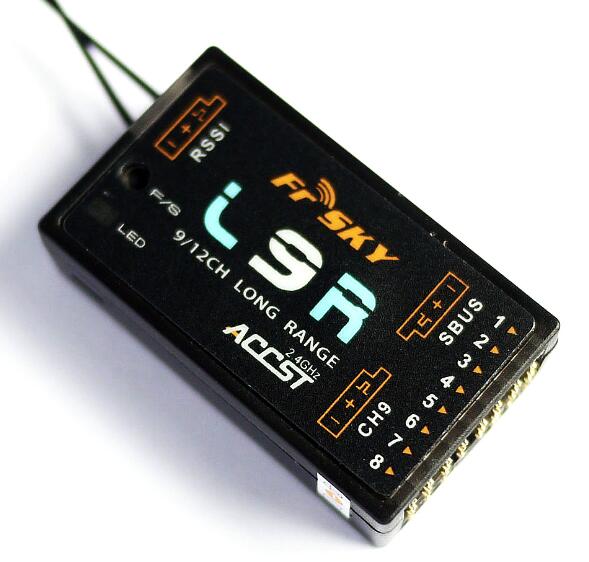
Of course with longer flight times you can go out even further, which is a mixed blessing. The risk of you never seeing your plane again goes up the further away the plane gets. Extending your flight range is something you want to ease into, perhaps going out 100 meters further with each circuit you make. When you start taking on mid-range flights you’ll need to consider the range of your transmitter and video transmitter. You may need to start playing with new video antennas to extend the range further. If your dream is long-range FPV the Bixler 2 may be a very good way to work your way up to it. The FrSky L9R maybe a perfect compliment to this plane, allowing you the distance up 6KM if not longer.


If you’re looking into mid-range flights another worthwhile addition is the SmallpartsCNC.com Bixler 2 Motor Mount adapter. With this you can put on larger props and turn the Bixler 2 into a cruiser. What you’re giving up for speed and agility you make up for in extended flight times. This is an all aluminum CNC machine motor mount and well worth the money.


Overall

I did a little research into what the original version of this plane was.  It was the Multiplex Easy Star. That plane is a 3 channel plane, elevator, rudder, and throttle.   It's less than 1400mm which means it's smaller than the Bixler 1.1.    The Easy Star is a well-designed plane but is a trainer.    The Bixler line added ailerons to the design.  The Bixler 2 now adds flaps.

If anything, you can argue that the Bixler 2 is over-engineered.    I say, cost per feature it's perhaps the best value RC plane on the market.    Now with FPV this is a plane that can chase thermals and stay afloat for long periods of time.  I find the Bixler 2 to be like a peanut butter and jelly sandwich.  It may not be exciting all the time, but it's good and it will make you happy.

There will be more to say about this plane when I get it flying in INAV FPV.


Tuesday, July 16, 2019

Hands on review- Matek F411-WSE


By:  Steve Schlesinger
Build by : David Story
Dinner by: Pizza Hut


FC Specifications


MCU: 100MHz STM32F411CEU6
IMU: MPU6000 (SPI)
Baro: BMP280 (I2C)
OSD: AT7456E (SPI)
Blackbox: No
2x Uarts
2x Softserial-Tx
2x Motors, 4x Servos outputs
1x I2C
4x ADC (VBAT, Current, RSSI, AirSpeed)
3x LEDs for FC STATUS (Blue, Red) and 3.3V indicator(Red)
Switchable Dual Camera Inputs
TR/SA VTX control: Yes
WS2812 Led control : Yes
Beeper output: Yes
RSSI: Yes
Voltage divider for Analog Airspeed sensor: Yes
FC Firmware


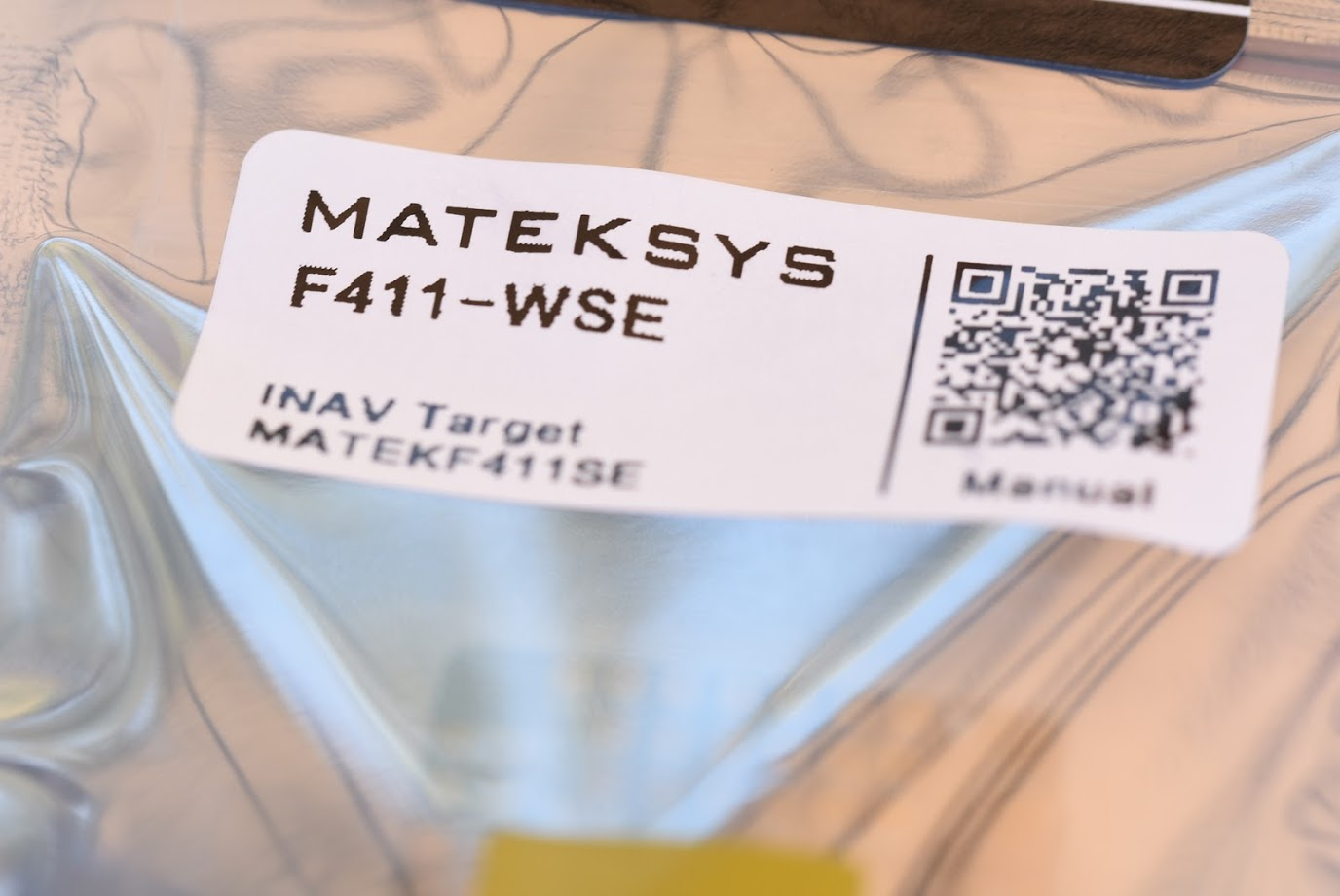
INAV Target: MATEKF411SE
PDB


Input voltage range: 6~30V (2~6S LiPo)
2x ESC power pads
Battery Voltage Sensor: 1:10 (Scale 1100)
Current Sensor: 78A,  3.3V ADC,  Scale 423


Where does this fit?

The main selling point of this board in my mind is that it’s a mini board but you don’t need to be at the top of your soldering game to build this board. You don’t have to solder wires to pads like on the FCHUB PDB A5 for the F405 Mini. Thus, this board opens up the mini flight controller to those of us who are still working on our soldering skills.

This is a flight controller that is designed for a plane because it only has two motors it can support from the PDB. It’s small, it’s very light (8.5g) and fairly straight-forward to get working. I hesitate a bit on this board because it is small and probably not your best choice as a first board because some of the pads are smaller than normal. If you have a few flight controllers under your belt, by all means, you’ll love it!


The WSE covers a lot of ground. This is an attractively priced bundle ($38 US) that comes complete with the flight controller and PDB in the same package.. When you really start to figure out how much the mini flight controllers sell for, they are not cheap by any stretch of the imagination. If you’re making a simple build, such as a little 600mm plane that you’ll fly occasionally do you really want to be spending $50(US) for a flight controller setup? Are you going to be putting Smart Audio on, and a fair number of telemetry devices? What if you just want to build a simple plane with a flight controller, VTX, RX, GPS, and camera or two? As compared to the F405 Mini the WSE only has two UARTS and a slower clock speed. It shouldn’t make a difference for fixed wing on INAV. If you’re a UART junkie you’ll need to spend a few more dollars and spend more time building the F405-Mini.


A first look

A few small issues that had me thrown off a bit. The first is that I never got a chance to really study the board before I opened the package. If I did I would have noticed it was a simple pin layout style board. I also wanted to up my game at building flight controllers and get feedback on this board from someone who has built a lot of F405-Minis. I asked my friend David Story for help with this build. David has been a member of the Facebook INAV Fixed Wing Group since day one. When you go to his house you just learn a lot. Besides, he has a very nice wife and family.

David just more or less took over the build. David also spends a lot of time worrying about how things look. So, I learned a lot about wire wrapping.

What plane did we select?

For the plane I wanted to use it had to be something that could take advantage of the capabilities of this flight controller and be a logical choice. It also had to be something unbuilt, sitting on my shelf. Thankfully I had the ZOHD Nano Talon  ready to go. David has built one before and felt that people overload ed them a bit too much. When they go into a nose dive there is no pulling out of it. Having seen this exact thing with on of my Radians I know exactly what he was saying. Thus, with this build, I decided to keep the weight down. The WSE is a perfect choice. It has four control surfaces and just 3 servos. I wanted a light, and simple build. And to be a bit insane I added a T-Motor F60 to the build. It will run on 6S at 40A. And yes, there is a 32bit 42a ESC in the build. Thought this plane is a cruiser more than built for speed.


The issues we faced with this build had very little to do with the flight controller. The ZOD Nano Talon is a bit more of a handful than we expected. There was a lot of time spent trying to figure out where to put various components and drawing out very long motor wires. So, at the time of writing this, it’s still being built. I am waiting on a stubby VTX antenna. I use RP-SMA and David had to remind me a few times why he doesn’t like RP-SMA.


The Layout


Two boards, the flight controller on top, and PDB on the bottom. Instead of an FCHUB ribbon cable there are gold pins that go between boards -AMAZING. This is SOOO MUCH BETTER. I mean, I freaking love this!!!!!

Flight controller, it has an AirS pin, this is for an analoge airspeed indicator that can be displayed in your OSD.  INAV will not make any calculations on these measurements, for now.   Buzzer, and LED which are now standards. Support for two FPV cameras which is great. This is similar to that found on the F722-Wing. We’re actually putting using two cameras on the build. And, VTX output with filtered VBAT power. This is not dropped down to 10v or 9V however, and that’s a bit of a disappointment. If you’re running 6S you’ll be running 24v into your VTX. The filtered power is nice. The rest is the normal things you’d find for GPS and RX. There is inverted SBUS and two Softserial options.

On the PDB there was a new term that had us confused. “Vx.” What this means is that default is 5V. But, there is a solder pad close to the top of the board that you can short and the output turns to 6V. S1 and S2 are close to the ESC pads. There are pads for four servos. You don’t have to find 5V somewhere and do funky wiring. You just drop the pins onto the board There is a cutout for putting your servo leads in which makes it easy for your final setup.


The F411 WSE sitting inside the Nano Talon. Check out David Story’s handiwork!


Ideas for planes to put the WSE into

So, let’s talk about what this would be ideal for. I’ll list a few planes where this would be a natural choice.

Wing-Wing Z84- There is a renewed interest in this plane. It doesn’t have a lot of space inside and a board of this size would be perfect. But, let’s be honest, the flight controller will cost more than the plane. This would be an ideal plane to do mission flying with. That being said I’ve build this plane heavy and it’s not as great as when it’s light. With the right choice of motor this is a plane that can easily stay up in the air for over 20 minutes.

AR Min/ RMRC Mini Recruiti- This is a beloved plane. If you buy one the BEC has 5V coming off of it. Be sure to cut the red wire before hooking it up to the WSE or you’ll pay nearly $40 to see the magic smoke show.

BlackWing- This was a little Eachine plane that came out and excited a lot of people and then everybody dropped it as quick as possible. I ordered one and then accidentally ordered a second one. I threw an Omnibus in it, and I do have to say having flown it both as a LOS plane and a INAV plane it does fly well on INAV. There is a rat’s nest of wires in the plane instead of fixing them I think the plane would be better off with a micro-board.

Bonsai? - If you have an old HK Bonsai that you both love and rarely fly this may be a good challenge project for you. It’s time to bring it to the world of FPV. The newer Bonsai’s have issues with the servo placement and have not been well thought of. Thus, don’t waste your time with the newer Bonsai.


The WSE is so good I am ordering more!

I will order another one for the Black Wing. I am very impressed with this board. I am looking forward to flying this with the nano Talon. A video will follow within a couple of weeks.

As for David Story, he liked many things about the board but he’s a fan of the F405-Mini and since he’s a UART junkie, that’s he’ll stay with.


Specs:
http://www.mateksys.com/?portfolio=f411-wse#tab-id-4

Thursday, June 13, 2019

Steve's Radian build cheat sheet


Radian Custom Build


The Horizon Hobby Radian is an epic plane, beloved by experienced pilots and newbies.  In the summer months, what better plane to build?   Should you buy the Night Radian?  If you find yourself replacing the EC3 battery connector, and the Spektrum receiver why not just build it from the ground up?   And don't even get me started on the stock motor or the propellers built onto the spinner.  So, here's my source list of "Dream parts" for the plane  From start to finish this is what it will cost.


The Foam & Canopy  `$78

(All Pirces in US Dollars)

The foam comes in three pieces that are sold the price doesn't include the decal set.   This is for the non-Night Radian  If you feel like painting it and laminating it or putting on Plastidip or something else be sure to use Krylon Foam Primer.   Inventory fluctuates, but parts can often be found at hobby stores if you haappen to have one close by.


Main wings w/ spar- $35https://www.horizonhobby.com/main-wing-with-spar%3A-radian-pkz4720


Radian Fuselage-  $28
https://www.horizonhobby.com/bare-fuselage%3A-radian-pkz4767


Radian Horizontal Stabilizer  $10 
https://www.horizonhobby.com/horizontal-tail%3A-radian-pro-pkz4725

Canopy $4
https://www.horizonhobby.com/canopy%3A-radian-pro-pkz4713


All the other parts


Servos  - $18 for two

JX PDI-1171MG 17g Metal Gear Core Motor Micro Digital Servo


 If you happen to have some 15-17g servos laying around you can use them.  Or you can use the  Hitec HS-81.   Staying clear of the plastic servos for this build I am suggesting this one, a metal gear servo.   You will need two.   Be sure to cut the servo arms down so that the arms don't make contact with each other in the fuselage.


https://www.banggood.com/JX-PDI-1171MG-17g-Metal-Gear-Core-Motor-Micro-Digital-Servo-for-RC-Models-p-1075298.html?rmmds=search&cur_warehouse=USA


Speed controller-$15
Though you could get away with a 30A ESC for this build, we'll plat it safe.  For this price it comes with either an XT60 connector or a Deans connector.

Image result for fms speed controller

https://www.banggood.com/FMS-Predator-40A-Brushless-ESC-With-3A-Switch-BEC-T-XT60-Plug-for-RC-Models-p-1105060.html?rmmds=search&ID=512584&cur_warehouse=CN


Spinner-$13
If you are following along with the suggested build parts


Option C for the 4mm shaft for the suggested motor. Leapord motor or

Option D for the suggested Emax motor.

Otherwise, select the option that works with your shaft.  The size of the spinner for hte Radian is 50mm

https://www.banggood.com/Gemfan-Aluminium-CNC-Spinner-3mm-Pitch-50mm-Diameter-For-Folding-Propeller-1Pcs-p-1156633.html?rmmds=search&ID=510594&cur_warehouse=CN

Propellers  $4
The 11 inch propeller is slightly oversized for the motor.   It's an 11x8 when it calls for an 11x7.   This is for a 3S battery.  Be certain to pick up a few sets of props.

https://www.banggood.com/Gemfan-Electric-Nylon-Folding-Propeller-7060-7540-8050-9050-1060-1180-1280-1380-1-Pair-p-983784.html?rmmds=search&ID=517471&cur_warehouse=CN


Radian Motor Mount  $16

In order to fit an aftermarket Radian motor onto your plane you'll need a Radian motor mount sold by Small Parts CNC.     You will not need this option if you select the Emax motor, it will bolt onto the Radian without the need of an adapter.

http://smallpartscnc.com/index.php?route=product/product&filter_name=Radian&product_id=97

If he's out of stock, write to Terry @  Info@smallpartscnc.com  He'll get right back to you.


Motor

Leapord LC3536 960KV-Best motor!!!!  $30

This is a premium motor, and it's worth every penny!  It's well made  It's a 2-4S motor.  It will provide around 1800g (63oz) `4lbs  of thrust.  The flying weight of a Night Radian (a heavier build) is half this weight.  Thus, you'll have enough thrust to keep you out of trouble, and yes it will fly nice on 2S.


https://www.altitudehobbies.com/products/leopard-3536-8t-960kv-brushless-airplane-motor

Also good

Emax $25

This is the Emax version, it can take up to 3S.  The motor mount will work but the shaft size of this is 5mm as oppoosed to the 4mm for the Leapord motor.


Adding it up

The cost of the foam  $78

Everything else

Emax Version  $75
Leapord Version $95


Overall $150-$180

You will still need a receiever.  But, this is a complete build.   Other than the decal set which you can decidet buy or not, there are no missing parts.


Wednesday, May 22, 2019

"Why don't you just fly at a RC Airpark?"


The agencies that regulate airspace around the world are starting to throw their weight around.  They are starting to define what they would like to see and how to interact with us.   One of the ways is to register our flights online. There is going to be testing and some formal authorization process where the FAA (United States) is cool with me flying.  But only in certain places and under certain conditions.   There will be ways to monitor it and have police have some authority.  I don't get all up in arms about it because it will likely change 3 times in the next five years.  What I will say is that for each person who jumps through the hoops to get FAA approval, there are perhaps 100 other people who simply will not comply.  They will go to their local parks once every few months and run pack or two through their quad or plane. 

We're also living in a world where the media needs clicks, views, likes, comments, and shares.   Stories about drones, good or bad get people excited. Especially bad.  Like any technology, there is a certain mistrust.  Stories that feature us breaching the community trust seem to get views.  If a guy's a jerk with a bike, who cares?  But give the same jerk a drone and suddenly we need to be regulated.   The NIMBY's sing out in a choir.   "Not in my backyard, go somewhere else."   The somewhere else is often the local RC Park.

I went to Whittier Narrows RC Park.   This place is beloved and has been featured in so many videos over the years.   Yes, the folks there were very nice to me.  Lots of planes on display, lots of guy sitting around talking about their planes.  Large gas engine planes, and 6S EDF jets doing amazing flights.  I loved them, and it was very cool to see all this.  And yet it's a bit intimidating to be flying near the main runway when someone is flying something gas that is at least twice as large as what you have up in the air.  And of course, there are rules, major rules, minor rules, and unwritten rules.  It's very easy to step on someone's toes due to all the rules.  It's like being the new kid at school. Nobody knows you and you don't exactly fit in.    I suppose that me showing up with mainly foam delta wings wasn't a big hit. Neither was throwing a pin on the 72mhz board.  Yes, they still have one.  One of the few fields I've heard of that let you fly FM.

The people seemed welcoming, or at least laid back enough to not be all up in my grill.   But these are guys who are regulars, and this is their scene. Thus, suggesting that this is where I need to be doesn't exactly work.   It goes like this. 

You have a Monday meeting and you catch a midday flight that is supposed to be two hours non-stop.  When it gets cancelled you have to scramble. Your plans for laying out by the pool go out the window as you now have to make two flights and have a two-hour layover at the airport.  It's 8:00PM when you arrive at  your hotel. You call in for room service.  You order a beer because you need one.

"Oh, sorry, we don't serve alcohol in this city on Sunday.  But, if you get back in your car and drive west on the tollroad you will come to the town of Modine.  Get off at the   Modine  exit, hang a right on the left you'll see Castro's.  You can't miss it.    You don't want to drink there.  The drinks are weak and they charge way too much.  Keep going 3 or 4 miles.  Right after the Taco Bell and right before the Burger King is a strip mall.  Stinky Pete's is in the back.   Pull yourself up a seat at the bar, you're om for a treat. There's a jukebox and Stan loves to play "Celebration" by Kool & The Gang because Smitty hates that song.  But, before the night is over someone will play either "Sweet Caroline" by Neil Diamond or "Don't stop Belivin" by Journey.  We all sing along to those songs.  By the way, if you see a guy in a Houston Rocket's jersey, that's Wayne. Let Wayne know I found the carburettor rebuild kit in my garage. But it's for a Holly and not a Weber."

I would say "Dude, I just want a beer, I don't need a whole new social scene." 

And that, in a nutshell, is the real issue.   What I'm into isn't exactly what the guys at the park are into.   A lot of the RC Parks are closing down close to me because the land is too valuable.  My closest RC park is facing the potential chopping block because the park it's in is getting a huge renovation.  Someone could come up with an idea for pony rides or a petting zoo and suddenly, it's gone. But, in the meantime, the president of the club was suggesting that our city kick us out of the city parks and send all the business to him.    I will be certain to let him know that if this were to happen if we do show up, it won't be business as usual. If I show up, I'll bring the wrecking crew and we'll take over.

The real issues that we're about to experience in the United States is that there are many, many, many guys like me.  We like to go to empty parks and get our foam out and burn through a battery pack or two.  We're often in and out within the hour. It's hard to regulate this.


Wednesday, April 24, 2019

Visualizing RC Radio Range

Signal Hill, Hilltop Park, CA


Two words I love are "useful" and "free."  When I think of things that are useful and free, Google Maps comes to mind.  And yet, there are areas where Google maps aren't so useful.    What if you simply want to map your transmitter's range for your next flight?   In this hypothetical example, we'll look at Hilltop Park in Signal Hill, CA.   What better place to illustrate your transmitter's signal than Signal Hill? If you visit it on the right day in Los Angeles, it's lovely.  You can see all the way to Downtown Los Angeles and out to Long Beach.  The strange thing about the park is that it's only  110m(365') above sea level.  But, it's in the basin of Los Angele which is fairly flat, thus you can get a wonderful panoramic view.   Of course, the first thought that comes to mind is not "This would be an excellent makeout spot" but instead "Hey I want to fly my plane from up here!"  It's a bad idea for a number of reasons, aside from the legality of it the fact that it's densely populated once you leave the park and a crashed plane very easily could create property damage.  But the point remains, what radio system could potentially get you to the waters of Long Beach?

I am going to bring up four popular receivers

Spektrum AS3X-  300m range?


FrSky XM+-1K  range

Image result for xm+


FrSky L9R->3K Range
Image result for l9r


TBSCrossfire-6K+ range

TBS Crossfire Nano Rx

The FrSky is fairly well published.   Spektrum says the AS3X is "Full Range" and doesn't really disclose hard numbers.  Thus, I will trust it for the first 1000 feet.  The TBS Crossfire runs in the 900mHz range and under the right conditions and right tools can go 30K if not more.  6K is perhaps an understatement, or maybe not?  More about radio range later.

One incredible mapping overlay

Here's a link to the map I am about to share.  In it, you'll see four circles.

AS3X


The first circle is the Spektrum receiver's range.  300 meters is around 1000 feet.  The good news is that it will cover the entire area of the park.  The bad news is water is nowhere in site. The AS3X is a Spektrum receiver with flight stabilization built-in. It's really more of a  line-of-sight receiver than one built for FPV.   I'm sure range is further than 1000 feet, but 5 times further?  Unlikely.  There is a Home Depot and Costco just below the park and chances are good that you can still see your plane after it goes out of range. That means that the receiver is fine for park flying but for long range FPV we have to look elsewhere.


AS3X Ramge


XM+


FrSky XM+


The XM+ is an SBus receiver with just one set of pins.  On that one set of pins it puts out  16 channels.  It's tiny and very light.  The advertised range is 1km though others have gone much further under certain conditions.   Low to the ground in busy areas the range can be below 900 meters.


The small circle in the center is the Spektrum AS3X, the larger circle is the XM+.  That's what five times the range looks like.   Impressive but still nowhere near water.  It's great for FPV where you're staying fairly close to where you're standing.  1km is a bit too far to see with most planes thus it's ideal for FPV.  Still, we need more range if we're going to make it Long Beach.


FrSky L9R


It's time to pull out the big guns.  The "LR" in "L9R" stands for "Long Range."  The specs say that the L9R has a range that is greater than 3km.   Cool, but, what is that?   Since they came up with the number 3km that's what we'll use.


L9R
And now, water is on the map for the first time. As you can see the smaller circle is the XM+ and the tiny circle is AS3X.  The water is within sight, and the L9R can do at least 3K, so why not just go for it? Of course, if you lose signal and don't have INAV correctly programmed someone will find a free plane.


TBS Crossfire

One does not merely buy an FrSky radio system.  When you buy the Taranis you're investing in FPV.  Still, if you want to go further there are more options. When you get into OpenTX and INAV what you're essentially doing is using a radio to have one computer negotiate with another computer.  You will not be able to see your plane 1K out and you cannot trust that your video transmitter is going to work flawlessly.  You need a failsafe, which is a computer that will fly your plane back to you should you lose signal in either your radio receiver or video transmitter.  And yet, if you want more range you'll have to move on to newer technology.
TBS Crossfire

The Crossfire by Team Black Sheep is in the 900mhz band.  You don't need a Ham Radio license to fly on this band.  Some people are claiming flights over 30K with the TBS Crossfire.  And now, for the first time, we see that this system can cover a range from Signal Hill out to the Queen Mary and back.  You can see all four circles.  If your plane can achieve a speed of 48K/Hr the total flight would take 15 minutes.

Radio Range-Having a healthy sense of scepticism


We'll be flying at a dry lake in the coming months.  There is nothing around.  No hills, no trees, no buildings, no radio interference to speak of. Just flat, wide open land.  The radio range will be off the charts because there isn't much to interfere with a radio signal.  This map is the polar opposite. Trees, buildings, some small hills, and a solid ton of radio interference, even on 900mhz.

I'm certain that people are getting a solid 1K on the AS3X, while others have advised me that they get 3K from the XM+ and there is a video of the L9R going 14K while people are taking the TBS Crossfire out 30K+. If you can monitor RSSI values while flying it certainly helps.

Here's a video from the park in question. At one point you can see the Home Depot and Costco where he probably would have lost range with his drone.


A more practical application.


One of my buddies has a timeshare in Cab San Lucas.  I've gone with him before and flew planes on the beach, it's a  ton of fun.  At the end of the harbour is Los Arcos, which is famous for its beauty.  The question is, what radio can he use to make it to Los Arcos?


Los Arcos, Cabos San Lucas Mexico


Cabo San Lucas


This is a 1K map and this is about as close as we can walk without having to get a cab ride to the other side of the Marina. This is a 1K radius which means that the circle is 2K  Los Arcos is just outside the 1K radius, but not by much.   Be sure to update your firmware to get RSSI readings.  Be certain that your failsafe settings are legit because you may be using them.


The Golden Gate Bridge


Golden Gate Bridge, San Francisco, CA


Golden Gate Bridge


Drones are banned from flying on or near the Golden Gate Bridge.    But let's imagine they were fine, or you have a wonderful lawyer on retainer.   You can see that the L9R would cover the length of the bridge.  The assumption would be that you would fly from the San Francisco side near the Golden Gate Bridge visitors center.


Lake Minnetonka


In the final example, I am imagining that I will make another trip to the city my wife is from, Minnetonka, MN. And I can talk someone to dropping me off on some desolate part of the lake. Before I even step foot on the ground I can figure out how far I can fly with an XM+ and where to turn around.

Lake Minnetonka

Flight planning


You can use this tool (again, here's the link)  so that you can quickly look at the range of locations you plan to fly.  The tool works in metric and imperial units and you can save a link and  keep it handy so that you can think of flight paths and landmarks to help you keep orientation.   You can do "What if" scenarios and decide if you need to upgrade your receiver.  As you can see from the examples you can view a map or satellite map.


Radio range


It's impossible to say exactly how far your radio will work.   Instead of one factor there are as many as seven factors that have influence over your range.  If you fly low to the ground in an area with a lot of radio traffic the range may be less than what's listed.   If you're flying high in low radio traffic areas it may be considerably more range, perhaps twice to three times the suggested range.     If you have a receiver with RSSI that will help alert you when your receiver reception is critical.  Of course, all of this is based on the notion that your VTX will work further than your RX which is often not the case.  With this tool, you can also start mapping the range where your VTX has fallout.


One huge benefit


It's easy to lose orientation easily when flying.  With a GPS and INAV configured you'll always know where home is.   But, I wouldn't rely only on that.   Looking at the coverage circle on a map you can get a sense of where you're likely to fall out of range. You can look for landmarks in the area so that you know how far you can comfortably venture out to and where you should start turning back.  You can even make a second circle that is 80% the size of the main circle,. You can visualize where you can make your turns.  Look for recognizable landmarks from the air to help you know where to turn and how to get back.


Friday, April 19, 2019

Why your plane loses altitude in angle mode


The mystery


I wanted to know some simple truths in life, such as who built the pyramids,  why hasn't the United States converted to the metric system, will the Smiths ever make another studio album and why did Nikki Miller turn me down for the prom?

Some things in life are too complex to grasp.  But, looking at my broken C1 Chaser on the ground perhaps there were a few things I could still learn?  In the angle mode it kept dropping, and  I had it too close to the ground,  directly overhead and lost perspective.  Not the smooth INAV experience I was hoping for.

So, as the glue was drying, yet again for this version of the plane I asked the smartest people I know, who happened to be on the INAV Fixed Wing Group what happened. Someone wrote in a nice reply that answered the question.

Image result for level flight

Level vs altitude

A perfectly level plane won't lose altitude, right?   Or perhaps a better question is, what do you want?  Do you want your plane to fly perfectly level or do you not want to lose altitude? Because a  level flight usually is a flight that drops.  When we first set up our flight controllers what we're asking is for the plane to fly perfectly level.    And my flight controller was performing perfectly.

But, planes aren't exactly perfect, and they don't fly exactly efficiently. It has to do with the way that the air travels across the wing.  The tendency is that at level flight many planes will sink.  But, it really depends on the airfoil.  Some planes are designed with a bit of reflex built in.   But, most just sink when level.


2.5 is my magic number


To combat the loss of altitude we have to pitch the nose up ever so slightly to compensate.  One of the first things I do when I get a new flight controller before I even begin soldering is to flash INAV.  When it's flashed one of the very first steps is a calibration.  I will teach the flight controller what the six axes are in my world.   I find it best to do this on a desk and hold the flight controller perfectly still for each reading.  I find that these are the six truths that the flight controller must learn.   But, shouldn't you do this in a plane instead?  It's like having a compass (not the same, but similar) that you mount in your car.  If you mount it on your windshield at an angle, do you need to recalibrate your compass?  No, because it will always know where north is, no matter how it's mounted. 

My view is that straight up and straight down really aren't open for interpretation. Neither are the other 4 axes.  The position of the flight controller may change, however.  That's what we have to account for. When your flight controller has learned it's six truths it can make accommodations for its environment.  You can mount it upside down, 90 degrees left or right yaw, or even 180 degrees.  But we have to tell the flight controller that it's not mounted exactly as expected. 

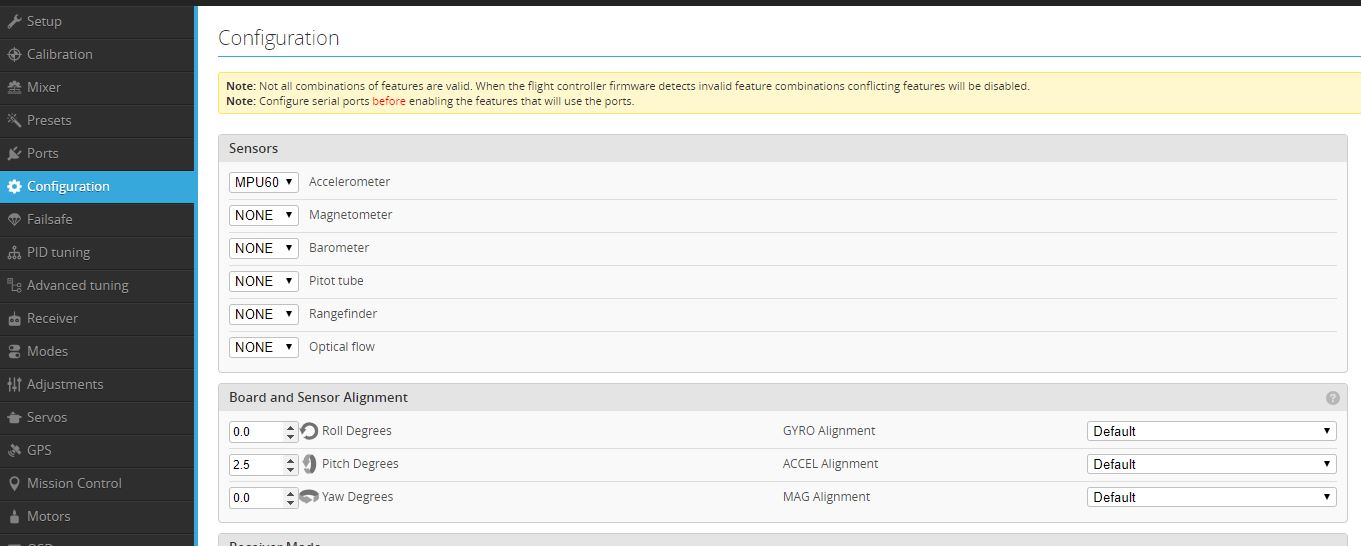
In the INAV Configurator, in the configuration tab on the top left, there are boxes where we tell the flight controller how it's mounted. This is where you can account for it being 90 or 180 degrees off yaw or upside down (180 degrees pitch).  If I am not making any other pitch adjustments I change the number to  2.5 (positive). That doesn't automatically fix everything, but it's a very good place to start.  If the plane still sinks in normal flight I can take it up a half a degree at a time.  If the nose is up too high it will gain altitude too easily and may seem like the control surfaces have even less authority. 

To answer a question people will have, yes, most of the time it works fine, or well enough to allow me to perform an autotune.

 I don't want people reading this and thinking "I don't want to lose altitude and crash, why not give it 5, 10 or 15 instead?"   If you want a real-world example while this isn't such a good idea, get on your bicycle and ride an 8% grade.   8% is a small number, right?   You'll be huffing and puffing and grunting all the way up the hill.  I have one near my home that's over 2km long  By the time I'm at the top I can see the valley below,. The valley is where I start out at before the 8% climb. Little numbers make a big difference.


Play with it.


If the plane is still sinking, a bit, take the number up to 3.   If it's not sinking but you're concerned about lift or authority over the control surfaces, drop it down to 2.   If it's too off for your tastes, land the plane and don't fly it again until adjustments are made.

There is no right number for every plane. So, experiment, and be choosy about what works for you.   I find that 2.5 helps get me to the point where I can autotune the plane.  Every time you change this pitch number in the configurator you will need to do a new autotune and possibly an auto trim of the plane.

We'll be working on a master-tune document, but I wanted to get this out there right away.

I will give you some other clues as well.

Your plane really should fly well in manual. If it doesn't and you're not up to snuff on tuning skills you need to ask for help.    You have to fight to get the CG right and the control surfaces working to keep the plane in the air.   And if you can get a gr a good eat flying experience with your plane in manual the rest will fall into place. 

If your plane flies well in manual but not well in stabilized modes you should perform an autotune.  Hold onto your hat because for a short period of time the plane will fly even worse.  Then it will fly much better over time and you will really like the results.  Be sure to save.

If you are in the stabilized modes and you have no authority to speak of you are most likely  tail heavy.   A quick way to tell is to put the plane in manual, get it up high and point the nose at the ground.  If  the nose balloons back up with speed you are  tail heavy. 

Fine tuning is an art in INAV.  Be very picky about what you like and work on improving your plane for a good experience. 

The fun of buying used planes

  If you like to buy and sell used planes.  Occasionally you can find really good deals. I mean, mind blowing deals.  Most of the time you d...