Friday, August 7, 2020

Product Review: ISDT/URUAV PD60


Here's  a new product that may be of some interest for specific purposes. It's a charger for your flight packs, a "smart charger" , the PD60 Smart Charger from ISDT/URUAV.  It handles up to 60 watts. which is something I wanted to check out.  I don't have high demands, but I do have some minimal needs. 

Specification:


Model No.:PD60

Input voltage: DC 5V-20V

Output voltage: DC 1.0V-20V

Max Input Current: 3A

Charging Current: 1A/2A/3A/6A

Max Charging Power: 60W

Balance Current: 0.5A/Cell Max

Support Quick-Charge: PD2.0/3.0,QC 2.0/3.0

                                       (Not supported 5V/1A power supply input)

Support Battery Types and Cell Count: LiFe/LiHV,LiPo 1-4S

                                                                    NIMH/Cd 1-12S

Abnormal Voltage Alarm: Support

Incorrect Cell Count Setting Alarm: Support

Working temperature: 0-40°C

Storage temperature: -20-60°C

Dimension: 56x85x21mm

Weight: 87g


Test:  I use 3S 2200mAh 3S batteries quite a bit.  Without buying  new equipment, can I charge these 3S batteries?

Background:  The charger requires another charger to use it, such as the charger you use to charge your cell phones.   It requires USB C input to charge and then will output up to 4S batteries using XT60 connectors.   I have learned that with this hobby I  need  all  a Mini ISB for FrSky transmitters, micro USB for flight controllers and now USB C.    In other words, have a bunch of different cables or adapters handy.

USB Chargers, read the fine print- To get the full benefit of this charger, you'll need a charger that can output 3 Amps on your USB C charging cable.  This isn't that common.   Two amps and under is what is common.  The output can also drop if you're charging more than one device.  If you're looking to buy a new USB charger check out the total output per port, and what it drops down to when more than one device is attached.  This may affect the way the larger 4S batteries are charged

My thinking is that if you're going to be charging the larger 4S batteries and perhaps 3S batteries you probably will reach the limits on this charger.


Three practical applications for this charger


#1. Charging in your car-  Bring enough batteries you can keep charging as you fly so that  the fun lasts a bit longer.  This charger is small enough to keep in the glove compartment for those random charging needs.

#2. Overnight charging-  Sometimes, I can't get to charging until I get home. With this little unit, I can have two batteries charging at the same time.  When I am not using the charger, it doesn't take up a lot of space or has wires hanging out of it.

#3. Vacation charging- Every guy knows what I am talking about.  You're planning a family vacation by car and you've got it narrowed down to five of your most favorite larger planes to take along.  Then the wife packs the car and you're lucky to bring along your FPV gear and a Dart 250G.  Space is always a premium. But, the phone charger always goes along for the trip.  Things that charge that are small are appreciated.


The results:  It did do a full charge, but very slowly.  I may have to buy a better phone charger. Overall, this is a nice little charger. It's a good value for the money.  To get the most out of this product you may need a better USB charger.  

Overall: If you are in need of a small charger and don't mind slower charging times this product is great.   I am going to use it as an overnight charger.  Not a bad little tool for not a lot of money.


Wednesday, July 22, 2020

Cheap and Nifty- Servo Extensions and Safety Clips


You will need servo extensions


Gear Head RC Universal Servo Safety Clips, 2-Pack


Regardless of what type of flying you'll be doing it won't take you long before you run into a situation where your servo is too short to reach your receiver or flight controller.    Servo extensions are the type of thing you should buy in bulk because you'll need them.  A common size is 10CM (around 4"). You can buy them in 15CM or 30Cm  which means they'll be close to 6" or 12"., I suggest buying these in bulk,  one pack each (see below) and having them on hand because they will keep your plane out of the sky.   You get a new plane, it shows up and 80% through the build when you realize your servos won't reach and you either have to pay too much or to source them somewhat locally or wait a month for them to show up from China.


The problem with servo extensions


Servo extensions work great, there are no problems until you take your eye off the ball. Sooner or later, if you don't check on them, they'll come apart.   Sometimes they barely stop touching be look still connected.  This means that you can potentially send a plane in the air with a control surface that doesn't work, or stops working in flight.  I have experience landing a delta wing plane with only one working servo.  I was fortunate that the control surface was close to neutral so that the plane was still able to do wide turns in one direction.  With this, I had a very stressful landing, but the plane was fine.

Servo Safety Clips do one thing, the hold the connection between the male/female union together so that you don't have to worry about it.   There is only one level of security I can think of that would be better. And that would be to cut off the male and female connectors and solder the ends together.  Depending on how neat of a job you can do, you can hide the wring under a piece of heat shrink.   There may be times due to space or weight limitations that you will need to do this.    Sometimes you just need  5CM (2 inches) of wire and the extra two inches is in the way. Some people will cut and solder so that the wires are perfectly long enough. 

There are even longer servo extensions which are fairly expensive because you really don't need them that often. If you're using a flight controller with FPV setups such as INAV a fairly common thing to do is push the micro receivers far away from other electronics.  With a long servo extension, you can comfortably run the antenna away from other electronics. 


Servo Extention Safety Clips
https://www.banggood.com/10pcs-Servo-Extension-Safety-Clip-Cable-Buckle-Fastener-Jointer-for-RC-Model-p-1341374.html?rmmds=myorder&ID=231&cur_warehouse=CN


20 Pieces/ 10 CM Servo Extention
https://www.banggood.com/20PCS-10cm-30-Core-Servo-Extension-Wire-Cable-Male-To-Male-For-FUTABA-JR-p-1620769.html?rmmds=search&cur_warehouse=CN


10 Piece /15CM  Servo Extention

https://www.banggood.com/10-x-15cm-60-Cores-Servo-Extension-Wire-Cable-For-Futaba-JR-p-909171.html?rmmds=search&cur_warehouse=CN

10 Piece/30CM Servo Extention
https://www.banggood.com/10X-22AWG-60-Core-30cm-Male-to-Male-Futaba-Plug-Servo-Extension-Wire-Cable-Twisted-Cable-p-1102416.html?rmmds=search&cur_warehouse=CN


Thursday, June 25, 2020

Sunnysky upgrade


My "Go-to" brand for motors has traditionally been Racerstar.  To this day I still say that they are the best value in motors.    We've all built those planes we've loved only to find out that they become shelf queens.  Perhaps the $50 saved in cheaper gear would be better served being spent on better planes?

The turning point was the AR Wing.  I had the Racerstar BR2212 1400KV on that plane and flew it a lot.  The motor worked fine with the plane.  It gave nice long flights, was efficient and never failed me. Then, one day the grub screw that held the motor shaft to the bell loosened up. I barely landed.
Not to fear, I had another $5 BR2212 1400KV motor ready to go. 

This time I did some thinking. The plane does get a lot of use. Why not put a better motor on it?  Why not spend a bit more money and try out a so-called "premium motor."

I can describe the experience this way.  Image you're in a band and you're playing the local bars in town.   You start dating some nice gals from around the area. Then, one day you sign a big record deal and you're a household name.   Now you're dating Hollywood actresses and supermodels. Yes, it was like that.

Why it was better

Sound- When the plane fired up the sound was a lot smoother.  Not pitchy and whiny, not dry sounding, but a nice smooth "Let's go flying" sound. 

More thrust- I could feel that right away,  this was a trade out of a 2216 to another 2216.  There was around 30% more thrust.   The plane flew faster and had no problem getting up to altitude.

Efficiency- The plane lasted around 30% longer in flight.  This was very noticable.


My two cents

This is the point where I should say that I am swearing off cheap motors forever and only buying SunnySky.  Bubs, you don't know me. I'll get by with the crap motors for a while. And that's not a bad move.  Some planes just get flown to death while others seem to be mildly amusing./   I will gladly start off with a Racerstar motor and if the plane is belove it will get traded out for a Sunnysky along the way.   I don't wait for the Racerstar to die, I just put it in my used motor box and the next plane to come along will get the motor. if applicable.


Tuesday, May 19, 2020

What I think of Racerstar Motors

I’ve finally killed a Racerstar motor. It’s a BR2212 1400KV motor. I could have gotten a bit more life out of it. The grub screw that clamps the bell onto the shaft came loose after many hundreds of hours worth of flight on my AR Wing. The motor got hot and the wires melted. I supposed this is a rite of passage. Then again, I could have killed it off a lot sooner had I run 4S all the time and pushed the motor to its limits. 


Racerstar BR0605B 14000KV Brushless Motor
So, here’s my take on Racerstar motors.


The Good


Cheap as chips- The Racerstar motors are cheap. My BR2212 was $5. This is usually the point where people will say “I take the hobby seriously and I don’t have time for cheap motors.” Trust me, I hear you. But there is a difference between a plane that you rarely fly and one that is your go-to plane. How do you know how much you’ll like the plane? My thinking is that if you love the plane, sooner or later you’ll need to do some work on it. If it’s a PNP, replacing the plastic servos and cheap motor is nearly a given.

Far better quality than expected- I’d say it scores 75% on build quality. Essentially, if you have mild expectations a Racerstar motor will be more than enough to get you started. Had I been a bit more diligent in checking the set screw, I’d probably still be flying with the one I killed. But a lack of threadlocker on the grub screw in one of the many reasons why these motors don’t score higher.


The Bad


Thin wires-  Thinner gauge means more resistance which ultimately means a cut in performance. Also the lack of bullet connectors is a turnoff

Price Point Driven-  They are trying to throw a product into a box to make it as cheap as possible. I understand that it’s not ten times more expensive and appreciate it. But the cost savings between it and other motors isn’t huge.


BR22121000KV Racerstar BR2212 1000KV 2-4S Brushless Motor For RC ...

What to keep in mind about motors


We owe a lot to our quad brethren. Next time you see them, thank them for throwing untold hundreds of millions of dollars at their hobby. They are people who like to throw full power at their quads for the duration of the flight. It’s with this extreme use that we benefit from motors that are usually more than up to our needs. When their motors stop, the fun ends. When our motors stop, the plane can often quietly glide back home. As the motors were made to withstand the abuse of quad pilots, our planes benefited. We have fantastic motors that are dirt cheap. And we usually only need one, sometimes two motors.

The Racerstar BR2212 rated a solid “C” for quality.  You can get ¾ the quality for half the price of other motors, if not more. So, what are you paying for? The other 25%! How much that’s worth to you is really up to you.

Motor wires- The smaller the garden hose the less water can flow through it. Electricity is similar. Except, instead of water we talk about current. The narrow wires create more resistance. This is especially important when it comes to pushing the motor to the full extremes. One of the first things you’ll notice about the more expensive motors are the thicker wires.

Motor Windings- If you look at the difference between a Racerstar motor and a high end motor the windings look less crude on the premium motors. Perhaps the process isn’t as fast to make the nicer motors, which results in higher prices

Bearings- There is a strata of bearings. The better bearings are more expensive.

Other factors-

Construction of the bell, how the magnets attach, shaft materials used all are finer points. One other factor that is small is that Racerstar motors don’t come with bullet connectors. I have no problem soldering on my own. But I don’t thrive on the experience of doing this.

Where I see Racerstar motors fitting into the grand scheme of things


I don’t buy plastic gear servos anymore. What’s the point? They strip and die and I’ve actually had them die in flight which led me to go find the lost plane for about an hour. However, motors are another story. You can get by with a cheap motor for a while, long enough to understand if you like the plane, or if the plane needs a stronger motor, or a lighter motor to help with CG. There is nothing wrong with starting off with a Racerstar motor and seeing how the plane flies before making other motor decisions.

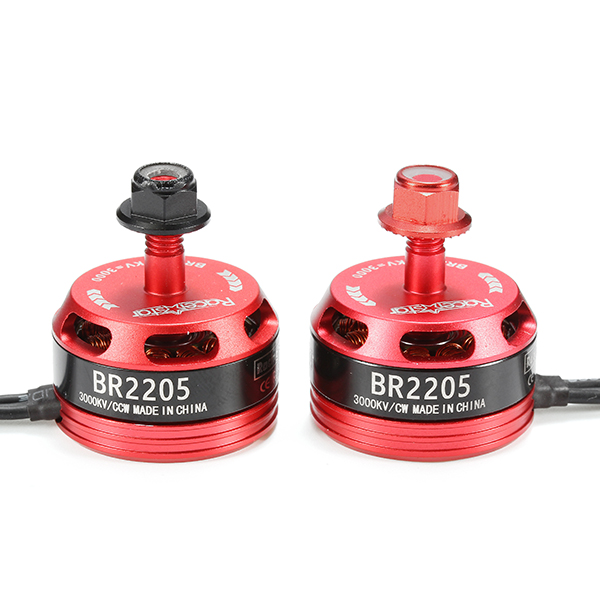
Racerstar Racing Edition 2205 BR2205 3000KV 2-4S Brushless Motor
Keep in mind weight

One factor that isn’t discussed as much as it should be is the weight of a motor. If the weight is too heavy for your plane you’ll constantly be fighting CG issues. And if you can get it sorted out and can get the plane to fly it will need considerable speed to keep in flying and may very well land hot. This can lead to more damage to the plane over time and a shorter life of a plane.


Motor Specs-Anything but scientific


The motor specs listed on websites when you’re looking to buy a motor are at best suspect. There are no standards to which the motors are measured. If they were truly scientific they should be repeatable. At best, they are directional.

Then you have some very well intentioned individuals who hook up batteries and speed controllers to scales to give a bit more real world test with batteries and props they list. The issue is that the batteries sag under use and the rate of sag varies by battery. In order to do this properly you would need a more consistent power supply that wouldn’t sag underload. Again, this is directional and often very revealing about the true specs of a motor. Sometimes the thrust is greater than what is published.

In the real world example they often show propellers of similar size but from different manufactures. The results can vary, sometimes there are large variances. Propellers are often like motors, the more expensive ones provide a bit more thrust.


Efficiency


Grams of thrust/watts=efficiency. 

This is a common way to rate motors. It can also be misleading in the respect that some motors are built for getting the last bit of thrust out of the motor. They get hot and start consuming amps. You pay a steep price in efficiency to get that last bit of thrust. But, this is the market they are after. They are built for people who want to get the ultimate performance out of the motor. Many of the newer quad motors can run exceedingly high temperatures. Sometimes they list the temp readings in the motors specs

Meanwhile, there are some motors that have low amp draws that are very efficient when it comes to the specs. It’s because they never struggle. If you look at the specs you’d think that it’s a more efficient motor. When you start comparing how much power it takes to get 200 grams of thrust, or 500g or whatever level you’re cruising at you may find that the motor built for speed will hit these levels with less power than the so called “efficient” motors.


X MotorsPutting it all together


People approach building planes from very different angles. I was at one point in love with getting a new plane every few weeks. Thus, I ended up with a lot of planes. I couldn’t afford to put the top of the line everything into so many different planes. But, when I started to rebuild them, the ones I liked I wouldn’t see an issue with upgrading a motor, and putting on better props.

I am not a motor snob. I am a cheapskate. Thus, for most planes that I rarely fly, the Racerstar motor is more than fine. But, if it’s a plane I like to take up quite often, I’ll spend the extra money on Sunnysky or another brand.

Racerstar is like McDonalds. It’s not going to be the best meal of your life, but you’ll know exactly what you’ll get.


Wednesday, March 11, 2020

FAA & Drones-What's next?


What do you do? Do you sell your planes and quads for what you can get for them and quit the hobby? Will you be hosting a huge bonfire party for your friends and family to watch as you burn your worthless planes and quads and devote yourself to binge-watching Netflix like a good American? Do you continue on like nothing is going to happen to the hobby, and write off the FAA as a toothless tiger?


Aside from speculation by reading tea leaves, chest-thumping and wildly wrong legal analysis we need to work with what we know and what we’ve learned. What we know is that we’ve been waiting for this shoe to drop from the FAA for a number of years. It came right around the start of this decade and leads me to believe that this decade will be about change. Here are the top 6 takeaways from what we learned.


#1. The FAA wants us to comply with their existing model
- The FAA model for GA and commercial aircraft is that most flights originate from an airport. The planes not only have to comply but continuously need to comply with FAA regulations which do change from time to time.
This model is fairly easy to understand and to maintain. I believe the FRIA concept was partly a mimic of this model, and partly representative of the voices that were being heard from the hobbyist community.

The FRIA concept looked to be the thing that was most half-baked in the NPRM.  It was the thing that got the club field pilots to write in and oppose the NPRM.  I am not anti-FAA but I do feel that this is the time when the entire flying community does need to circle our wagons.  Though I am not a club field pilot, I will fight for their right to exist. 


#2. We get to help fund the FAA’s ideas- I live in California, so trust me, I’ve seen this before.  The introduction of a new idea that taxpayers and in this case hobbyists get to pay for.  The plans will change over time, but the idea that we’re going to help fund something usually never changes.  The expense was one of the largest talking points I saw over and over again in the comments about the NPRM.    We need to stay focused on this point.  This hobby cannot turn into a hobby of the ultra-rich.

#3. Directional in nature-  The portions about Remote ID were long and specific.  The hobbyist portions were much shorter.  The take away is that hobbyists can either comply with the strict regulations of commercial drones including not only Remote ID but what will be allowed to fly beyond line of sight.  The FAA was very specific about who makes the planes and the fact that they will have serial numbers.  If you don't wish to comply you will be required to fly no further than 400 feet in any direction at one of 1200 FRIAs.   This sounds very specific like it was a done deal.

Yet, watching the Drone Advisory Council and listening to the lobbyists of the AMA it seems that despite the harsh wording, at best this is a rough draft.  That being said, some form of remote ID is a given. How the FAA manages to make this work is a proposition with more questions than answers right now.  But, you can see where they would like to go with the remote ID concept. In one form or another, it will be a reality.


#4 Interest in the NPRM went up the chain beyond the FAA-


When Elaine Chao, Secretary of Transportation encouraged people to write in regarding the NPRM and support it, it was, well, bizarre. Why was she advocating for a change in public policy to the extent that she used the Colorado drone sightings as a talking point? By the time she brought it up, the drone sightings were over and the story was out of the news. My feeling was that by this point, the initial batch of citizen responses to the NPRM came in, and they weren’t positive. Perhaps the need for funding would be easier to sell to the Senate if the American electorate was behind it? At the very least, there are other players such as the Department of Homeland Security and the FCC that are in play with this plan. It's very large and very complex. Please keep in mind that in the big picture they are thinking beyond the hobbyist and looking for a solution of how to integrate manless flights into the airspace. This is a quantum leap. They have lofty goals, but the timeframes they are thinking of may not be realistic.


#5. Some form of communication- The FAA suggests that we transmit a whole lot of information about ourselves. Altitude, speed, heading, who we are, where we’re standing. Why not just put our Facebook profile up as well? It does beg the question, exactly how much does the government really need to know about our flights? Another question, if we are broadcasting this much information, why do we need to stay below 400 feet?Image result for tin can phone
At the very least we're going to have to get into our thick skulls that the future of flying RC means some forms of communication with the FAA.  We're going to need to inform people where we're flying. There are different ways to do this such as LAANC which is an online tool we can use to notify the FAA about what we're up to.  Even Google has stepped up offering support with an app.   So, there is hope. The future of flying for us will mean some forms of communication with the FAA to let them know where we are flying.  Hopefully, it will be easy and seamless.


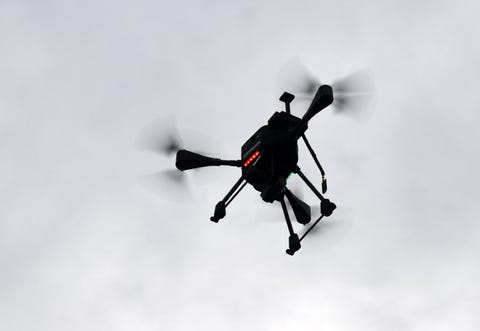
SINGAPORE-DRONES-TECHNOLOGY

#6. America has spoken, we don’t have a drone problem- Despite a couple of attempts of public cheerleading for the NPRM from Elaine Chao, of the 53,000 comments (and more from the mail) , only a small fraction support of remote ID.

Just because America may not hate drones doesn’t mean they have a mad love affair with drones either. But, at the very least this was an acid test to America’s tolerance of drones, and so far, so good We did our part by writing in, so thank you for doing that!  It did help a lot.

What this all means


This means our community did step up and did make our voices heard. What I am anticipating is that computers will read the comments, strip out the keywords, look at the demographics of the people who responded, and perhaps even evaluate the complexity of the writing style. Basically, they are figuring us out. I know that, by law, every comment has to be read, that will take a long time. But, thanks to computers, the comments have been categorized. They can get the gist of what is on our minds and respond to it by category.

We had 60 days to comprehend what was being proposed and responding back to it. The NPRM was complex and things of importance to us were well buried in the document.  Our community did step up.  But, this is just the start. We need to stay engaged.


What’s next.

Now, we wait.  Legally, the FAA cannot address it unless it’s in a public forum. In the downtime, you’ll hear rumors here and there. That along with people’s opinions of what may happen will be enough fuel speculation. When they finally state what they intend to do with the rules they proposed is when we have something we can work with. Before we get all crazy with lawsuit talk, there is still pressure we can put on the FAA in Congress. Just as the FAA can presell the public on remote ID, we can do the same at the legislative branch of government.   When the call for writing your Congressperson or Senator comes out from the community, please do your part and write in.


What to do for now

 Just keep moving along with the fun you’re having. We’re in the first inning of a 9-inning game with the FAA. Brace yourself for a very long process.

Right now, the best thing we can do is not freak out or get emotional. There are a lot of moving parts to this change from the FAA.  In the big picture, they want to make drones work in their airspace and they are trying to figure out how right now.  Our community has spoken and I'm hoping that future communications from the FAA will be with more consideration paid toward the hobbyist.


What  I would suggest doing is to be more open about our hobby with your friends and family. Trust me, they don’t care about the current happenings with the FAA. Every now and then, share a photo or video and discuss what the hobby means to you. If you can explain to people how it helped you, even better. Explain how this is a STEM hobby and you are learning along the way.  This is also a practical hobby that kids can get hands-on with.

I would definitely make a point of stating that YOU fly with care and concern for more than just your quad/plane but for the health and well being of people and their property.   You care about their right to privacy and you really don't want to annoy people with your quad/plane.   You know the laws and you strive to fly in accordance with the laws.

When it comes to people who are "Careless and clueless" it is fair to acknowledge that there are bad actors in the hobby.  There are also bad actors in the driving community as well.  Just as reckless drivers don't define the driving community wreckless pilots do not define the flying community.  They are a very small portion of the overall community.

The downside of our hobby is that it's nearly invisible.  We're so good at flying under the radar that the one thing that was evident from the NPRM is that that FAA really didn't understand how large our community is or how we fly.  The FAA is quite familiar with the bad actors, but the rest of us are so low key with the hobby that you can almost understand why we were overlooked. 

We can live with personal accountability, we can communicate better with the FAA about our plans to fly, we have been good citizens thus far. Our hobby is safe and has a lot of positive qualities.  We just now need to do a better job selling this to the general public.

We're doing great so far.  But, this is going to drag on for a while.  Stay positive, stay engaged.

Friday, January 17, 2020

UAV and the FAA, a path forward


A topic I have a feeling that will get addressed again and again will be what the future could and should look like for model aviation.  How do we, as pilots find our place in the sky?  Though I am usually a law and order type of guy I don't think additional laws that are complex in nature would be useful.

The issues with non-compliance laws

If the FAA decides to enact laws that are widely ignored they will do more harm than good.   Once people start to believe that the FAA is an organization that you don't need to take seriously, the FAA will have a harder time establishing trust in the  RC community in the future.  Worse yet, they will become increasingly skeptical of the risks of flying well into controlled airspace.   The FAA doesn't have the manpower to go out and extensively enforce drone laws with the hobbyists.  Relying on local police agencies to do this for them also won't work.  Thus, part of the 'secret sauce' of successful drone laws is cooperation from the hobbyist community. There has to be trust, and it has to be a 2-way street.

CBO's as enforcement?

One thing that I heard from an FAA investigator which was interesting was that they were looking for community-based organizations (CBO)  to help them regulate the sky.  This particular investigator felt that certain CBO's in the General Aviation community did an outstanding job  So, they are somewhat expecting the same thing from the model aviation community.  Organizing people who mostly fly out of general aviation airports and who are not only known by the FAA but licensed by them is easier than licensing UAV pilots. We can fly just about anywhere and there is an ever-growing diversity in what we fly.

 How many RC pilots are out there?

The first question is, how many of us are there?   How many people own something that can fly regardless if it has been flown recently?  I would dare to guess that it's one in 10 Americans or nearly 33 million people.  Of that 33 million if we were to figure out the number of people who have flown something for 2 or more hours in the past year, I'd say that it's 20?% of that number or around 6 million people.   These numbers are much larger than the 200,000 members of the AMA and 800,000 American followers of Flite Test. Checking the total number from drone units sold doesn't tell the whole story, nor do statistics from the AMA or FAA.   So, six million pilots is a conservative estimate.   If a number of factors work out, I can easily see our numbers grow from 2% of the US population to 4% over the next decade.   We'll never be a truly mainstream hobby.  But, there are enough of us to make the insurance industry take notice.

Insurance companies as an intermediary?

The issue becomes that we're literally spread out all over the place, by age, location and interest.  Addressing us will be very difficult.    The one thing that may appeal to hobbyists is insurance.  This is of concern to the cities that host drone pilots as well. The cities don't want to be on the hook for any accidents.  If we had insurance companies taking the lead, it would help the FAA.   The insurance companies could spend more time analyzing the risks and assigning insurance based on factors to a degree that the FAA wouldn't care to delve into.  Premiums would be based on what you fly and where you fly.

Data analytics for risk assignment

The problem becomes that there are far too many aircraft types to rate them all by simple factors such as size and weight.  Insurance companies would have a financial interest in sorting this out.  They could assign risk factors and frankly describe what they will and won't insure.  A ten-pound long-range FPV plane may not be insured within the city.   If you choose to fly it, you'll be responsible for the damages.

Simple an inexpensive black box recorders could record the time, duration  coordinates and if a barometer is added, the altitude and speed of the flight. These could be mass-produced for not too much money and kept small enough to work on most UAV with the possible exception of a 3" quad.    In order to work, there needs to be a real-world analysis of how pilots truly fly.  Insurance companies as an intermediary would be a safer bet.  I think pilots would feel safer sharing information with an insurance agency than with the FAA.

The insurance companies would randomly ask for BlackBox readings from their customers on an ongoing basis and look at all the factors.  In order for a UAV to be insurable, it would have to have recorders that are always working.  A UAV that gets in an accident without a functioning BlackBox recorder wouldn't be insured.

People would be assigned risk factors based on age, location,  what they are flying, and previous flight analysis.


How we would work with the insurance companies.

In order to fly in the United States you would either have to post a bond or have insurance.  There would be a $10 premium for the lowest level of insurance.  It would have a $5000 deductible but would be a basic liability insurance product with fairly low caps such as $100,000.,  To get this insurance all you need to do is breathe and pay $10.   There would be no black box requirements and you would be insured for UAVs up to 1 lb. The caveat is that you would only be eligible for this for the first six months.  After this time, if you're still flying you would have to get on 'The Program.'

The Program

The Program would be about education and compliance.  In order to be insured to fly certain UAVs you would need to earn it.  If you would like to break the rules at least you won't be able to plead ignorance.  The idea would be to get us to a certain level of compliance where the insurance companies feel we're a safe risk and the FAA would feel that they would need to mitigate the risks of the hobby with more disproportionate laws.

Instead of making up a series of meaningless hoops to jump through the tests would be correlated to real-world data analysis from other pilots flying aircraft in the same class.  But what would make the most sense is that people would work their way up from smaller, lighter UAVs and with enough flight hours they would be eligible to start testing for larger and more elaborate UAVs.  There may be some more hardware requirements as they move into more sophisticated systems.

Remote ID

Remote ID has to be part of any solution we think of with the FAA.     I don't believe every UAV needs to be registered with the government.   All that is needed is something that blasts out a low power signal so that can be picked up by radio two kilometers away.   It would shout out a serial number, the serial number would shared with the the insurance company and the FAA.  The pilot could have the option of moving the radio beacon from UAV to UAV.  If they are cheap enough they would be permanently mounted on each UAV.  It would be nice if there was an option to have them stay alart after the UAV is powered off and allow the pilots the ability to track lost UAVs.

The idea would be that instead of broadcasting GPS coordinates an approaching UAV could detect signal strength  as it approaches and figure out how to stay clear  of the  UAV..   This should be more than good enough to meet FAA requirements. Canadian Geese are larger and heavier than the vast majority of the UAVs flown.  And they don' broadcast any signals.

Higher risk ventures

We have to be realistic in the respect that UAVs do have needs to enter controlled airspace.  Instead of pretending this doesn't happen why not layout the groundwork to make it safe?  If an insurance company would insure a flight into controlled airspace, it means they have confidence in the pilot and the systems in place to be okay with it.    This should be good enough for the FAA.   Instead of applying for waivers from the FAA the paperwork would go through the insurance company.  There may be an additional premium attatched to the evemt which would include any fees to the FAA for entering the controlled airspace. The UAV would also need to provide a signal strong enough to be picked up by the local air traffic control and the pilot would need to be in radio (or phone) contact with the tower.

Media and associated stringers would have special Remote IDs that would have their phone numbers also broadcast. Often times they would be in areas where first responders are working and they would need the ability to quickly communicate with the pilots.

Emergency alert

What would be benificial is for the FAA to devise a system advising pilots of a pending emergency in the area and to bring down our UAVs.  It would most likely be incorporated into flight systems in the future but,  in the meantime, it would be great to use as a phone app.


Pilot card

This wouldn't be a formal recognization from the FAA but it would serve to show your local police that you're insured to fly.  The card would have a QR code where the police could log onto the insurance company's website and go right to your profile. The police can list any issues that they have.  This would save the paperwork of dealing with the FAA and allow the police an avenue to moderate conduct.   If a pilot racks up a certain number of complaints in a year's time they may get their pilot's card suspended.

Legal Representation

Part of the insurance would be a certain amount of legal representation.   It may be the in-house counsel for the insurance company that would help advise you on your legal rights and point out how to get more legal representation should you need it.

Non-Compliance

Make insurance mandatory.  If a pilot flies rarely or in areas that wouldn't get noticed then they may wish to push their luck.  Instead of steep fines the violating pilot once caught could sign up for insurance and complete some mandatory, online education.

Interfacing with the FAA

The FAA could not simply ask for all the pilots who flew over 400 feet in the previous year so that they can hand out fines.  But, if there was an investigation occurring the FAA could request data. for specific instances from the insurance companies.

The other benefit would be that the insurance companies could be in contact with the FAA  and discuss the entire subject of UAV flights in the United States.  Two things to keep in mind.

#1.  The insurance companies would have better data on UAVs than the FAA.   One of the issues we're having is that politicians are editorializing our existence and we have very little data to back up our case.

#2.  You need to have an advocate who needs to have a financial interest in your existence.   The AMA was supposed to be that advocate for us.  But, they truly represent just one small and getting ever smaller segment of the entire UAV flying population.  They have a financial interest in more of us joining their club fields.   There are a fair number of people who want to advocate on behalf of the hobby and seem invested.  But, when push comes to shove they are advocating for their segment of the hobby.   What could end up happening is that the  FAA may end up dealing with dozens of different advocates who all want a voice in policy.

Final thoughts

There is a large enough base of pilots for insurance to be a lucrative thing for at least a couple of insurance companies.  The insurance company can act like a buffer between us and the FAA.   I do believe that most UAV pilots would like to help keep the skies safe and don't want to cause problems or damage.  We have a safe hobby with relatively few problems. This is the type of thing that insurance companies would love to insure because we'd be a great source of revenue.  The FAA would breathe easier knowing that they wouldn't have to rethink the rules every few years to address a rapidly changing hobby.  We can grow the hobby and keep the skies safe even in the era of changing technology that creates more air traffic.

What I have presented is fairly simple. I don't suspect it's the ultimate solution,. but hopefully gives a few idea about how to move forward and perhaps lead the way for better ideas.


The fun of buying used planes

  If you like to buy and sell used planes.  Occasionally you can find really good deals. I mean, mind blowing deals.  Most of the time you d...