Thursday, November 1, 2018

Bush Planes-Which one?


Image result for bush plane


Bush Plane-A bush airplane is a general aviation aircraft used to provide both scheduled and unscheduled passenger and freight services to remote, undeveloped areas, such as the Canadian north or bush, Alaskan tundra, the African bush, or the Australian Outback.-Wikipedia

My first look at a real bush plane was this one, piloted by a couple of guys who live in the high desert near Los Angeles. They land on sometimes rocky surfaces and wanted a plane that could take some abuse. In the RC world that may mean planes that land on grass or dirt paths. The large wheels make the plane very forgiving. I am trying to decide on which plane to buy for my fleet. I am looking at four planes. Two sold by Horizon Hobby at hobby stores, one sold by HobbyKing, and one that used to be sold by Banggood but can still be found at Motion RC.

I started off writing this article as a means for determining which bush plane to fly.  I went through all the specs and prices.   They all had pros and cons. Since I can't fly all these planes to give comparisons between them I will explain what I think the differences will be between them by just going off the specs.  The specs  for all planes including price of replacement parts are at the end of the article.

My thoughts on each
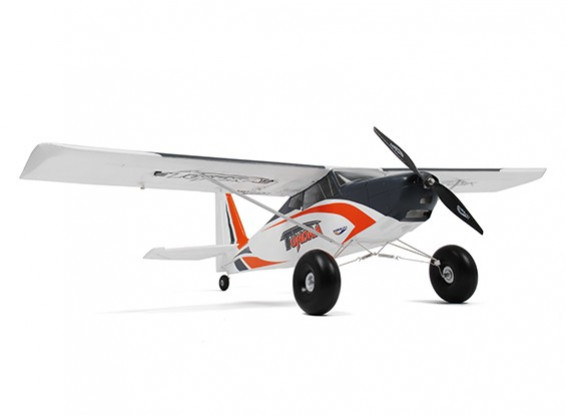

Image result for durafly tundra


 Durafly Tundra (HobbyKing)


The Tundra is the smallest and lightest option I can find. What I like about the Tundra is that it's the only plane that comes as a kit option. This means I can build it with metal gears servos and other hand-selected components.  The good news is that this is the cheapest option, and since I have most of the parts needed to build it on hand it's only the cost of the kit that I need worry about  The bad news, it's on perpetual backorder, to the point I am afraid it's been discontinued.  HobbyKing is excellent about dropping planes from their catalog from one year to the next.  If I could get my hands on it I would buy it.

The price makes it very attractive at $109 for a kit, though I found the larger Dynam Primo for about $40 more for a complete plane, not a kit.   So, bang for the buck makes this plane a second place plane.  But total cash outlay and being built the way I want this plane comes in first place.

Of all the planes this is the smaller at a 1300mm wingspan. It's also 10 ounces lighter than the other planes and over a pound lighter than the Primo.  With a 12" prop it's pushing a decent amount of power for a small, lightweight plane. 

I suspect that the landing gear will make it a bit weighed down which means that it will penetrate through the winds a bit better if you fly in breezy areas. 

One other big problem, other than being out of stock on this item is that there are no replacment parts in the United States.  Everything comes out of Hong Kong which means it's cheap to buy a new kit and scavenge from it than buy replacement parts.


Related image

Dynam Primo V2 1450mm


This is the second largest plane on the list at 1450mm, just slightly smaller than the Timber.  It has a large motor and a large propeller along with a lot of weight (3.5 pounds).   It's the heaviest plane of the four models we'll look at.  It's large and inexpensive and probably would make a pretty good FPV platform. The replacement parts for it are cheap and the plane seems so promising. And yet. .  .

The Dynam line has never thrilled me.   They've had some interesting planes, but none that I ever bought.  This plane looks good at first.  It's huge and you get a lot of plane for the money.  Here in the United States, the replacement parts are readily available.  The  build quality just isn't there.  Andrew Newton  pointed out the small battery compartment and poor rear wheel assembly.   I've heard from other who have said the landing gear breaks easily and I am very concerned about how the flaps are attached. It looks like that would break easily.   It just seems like I would be chasing down too many problems with this plane.


Image result for fms kingfisher


FMS Kingfisher PNP


This one's a fast no for me. The thing that stands out in my mind is the motor. It just seems like it would be underpowered for the amount of weight it's hauling around. Looking into it more, it seems FMS is trying to use the same motor for many different planes.  Thus, the underpowered motor as compared to what else is out there.    Out of the four planes this one rates last in my book. Pity, I do like how it looks.   It's also a somewhat expensive plane loaded with accessories I don't want or need.  I know Chloe from RCSafari loves hers and I'm sure it's a fun plane.  That being said, it's still a fast no.


Timber/Horizon Hobby


This should be the hands down, easy winner.   I will tell you five things I like about this plane

1. It's large and light- For each 100mm in size it's nearly 4 inches.   The larger wing can do a lot of favorable things such  provide for better stability of the plane which would be helpful for filming.   It can also help the plane glide a bit more, and it reduces the plane's overall wingload.   On calm flying days this plane can be nice and stable to fly.

2. 2200 3S battery-  These are very common batteries in the industry.   A lot of planes take this battery and they can be found inexpensively.  HobbyKing sells an XT60 version for around $11.   But, you may want to put in a battery with a higher C rating to get some more performance out of this plane.

3. AS3X receiver with S.A.F.E. technology option-If you have a Spectrum radio that is digital then you'll have no problem hooking up to this plane.  If you have an FRSky you can find a work around to use the module.  The included AS3X  (BNF) receiver which is a humble 6 channel receiver has a gyro stablizer built in  I have flown with the Spektrum ones and they tend to work very nicely   It's similar to a flight controller, there are three modes, 1) full manual  2) mild stabilization and 3) overbearing stabilization that limits the amount of banking you can do with your plane.  I call this thing an "Out of the box" experience  It just works, right out of the box.  Due to it's heavy-duty landing gear, high wing build and flight stabilization built in I think this would be a great trainer plane.  It's also large enough to take up fairly high and still see it, ideal for newer pilots.

 4. Parts are easy to order- If you ask me of the planes which one do I feel will still have parts for sale five years from now I would say it would be this plane.


5.  It has some positive buzz going for it online- People seem to enjoy this plane.  The only other plane with buzz is the Hobbyking Timber. 

What concerns me about this plane


It's the most expensive option.   Yes, it comes with a battery, with its own proprietary connector. I have plenty of XT60 connectors to convert it to something I can use, but still, that's extra work on a plane that should get with the times.

It doesn't have an FPV platform- That is a huge missed opportunity on this plane.

I would want a little more power out of the motor for a plane this size. 450 watts is good enough to haul this plane around, and a GoPro or Runcam.   But, if you're looking for a gyro-stabilized servo driven camera platform, this isn't it.

And the verdict is. . .


None of them.

I know, I seem like a jerk for saying that none of them really appeal to me.  Honestly, I did start the search for a good bush plane and I looked into all of them with the intentions of picking one up.   The problem with the hobby these days is that unless you know someone who has a copy of a plane you're interested in and you can get your hands on it and fly it the bush planes are too large to become something you stick in the corner of your garage and forget about.


What I can tell is that the wheels and landing gear are too heavy for a foam plane.  They add too much weight which cuts into performance on the plane.  The idea with these planes being STOL (Short Take-Off and Landing)  Is that you can get them in the air from the just about anywhere and the flaps add for a fast landing.  This makes them something you can fly at a park though I dare say that the Dysan Primo is a bit too large and heavy to really be considered a park flyer.    The HobbyKing Timber seems to walk the line of park flyer and performance.  It's available in a prebuilt form.


The flight times of 10 minutes is a non-starter.  Sure, if you want to charge up  five 2200mah 3S lipo batteries and bun through them in over an hour then you may be ready for some fun.  I think this is the largest issue with these planes, short flight times.   When you're having an average flight experience but have to land every ten minutes or so just to change a battery I have a feeling that this will get old very quickly.  

It appears that the entire RC Bush Plane concept is version 1 right now.  Who is this plane for?  Is it a heavy duty trainer?  Is this an FPV platform?   What if you care less about landing on water or snow?

What would appeal to me.


I want three options as  kits 1300mm 1500mm and 2000mm.    The 1300mm would be a simple park flyer.   Maybe I can attach a small FPV system on it but  for the most part it's a fun little line of sight platform that gets 20 minutes of flight.  HobbbyKing has this with the Tundra, if it comes back in stock.   The 1500mm could be a good mid-range FPV platform.  It would need to take larger batteries and have more space devoted to FPV gear.   The 2000mm would be strictly a long range FPV platform designed around hauling large amounts of gear and weight long distances.

I would want a variety of motor options for each.  Though some would build these planes for tricks I would want something that is stable and as efficient as possible.   I would want all parts such as skis and water pantoons to be add on options that I can deal with later if I needed them.


What I suspect will happen


I think the manufactures got disappointed with the sales of the bush planes and may not continue with them in the future.    My fear is that with the exception of the Timber most of these planes will become orphans where you can no longer buy parts.   I'm sorry, they are just too large and too expensive to take that risk.  It looks to me that his market is dying off when it's actually a cool idea and should grow.    It comes down to, who is this plane for?  If it's simply a glorified trainer than it's of limited use.   Will it still be compelling once someone is onto other planes?


I like the idea of a platform plane.  One that is unapologetically thick and hefty.  One that can take a multitude of batteries, and motors.  One with ample cargo space to throw in sick amounts of FPV gear. Would people spend $150 on landing gear with gas shocks for such a plane?  Yes, probably.


What this looks like to me is that perhaps the Timber was first to market. It was good but it wasn't perfect. I think others rushed to market with designs of their own but nothing was compelling other than the Hobbyking Tundra.   It seems like Hobbyking is making good on a version 2 of the Tundra, we'll see if they offer version 2 in a kit.

For now, I will, unfortunately, pass on all of it.


Specs


Durafly Tundra (HobbyKing)

Price $109 KIT/ $210 PNF
Size 1.3 meters
Motor: 
3636-950KV 35A, 400W (not included with kit, $25 more)
Prop: 12x6

Battery:  1300~2200mAh LiPoly battery (30C min)
Flying weight: 40.6  oz
Material:  (EPO)

Price for a:
Spare Wing: $38  (Global)

Fuselage:  $38 (Global)


Dynam Primo V2 1450mm
Kit comes with no electronics, PNF comes with everything installed except receiver. You will need to buy a 3S 2200 30C or higher battery, charger and RC transmitter.  FPV tray and other cool accessories are for sale, or were for sale at one point.

Price BNF $219 / $169 PNP
Size 1.45 meters
Motor:  3720-650KV, 42A 650w

Prop: 13x6
Battery:  2200mAh 4S
Flying weight: 59 oz
Material:   (EPO)

Price for a:
Spare Wing: $36

Fuselage:  $30


FMS Kingfisher PNP

Price  $219 PNP
Size  1.4 meters
Motor:  3536-850KV, 45A 450w

Prop: 11x7
Battery:  2200mAh 3S, 35C
Flying weight: 50 oz
Material:   (EPO)

Price for a:
Spare Wing: $47

Fuselage:  $60

Timber/Horizon Hobby
Price $249 BNF/$219 PNP
Size 1.5 meters
Motor:  Brushless outrunner 10 size  110KV, 40A 450W
Prop: 12x4

Battery:  2200mAh 3S
Flying weight: 50 oz
Material: Z-Foam  (EPO)

Price for a:
Spare Wing: $56

Fuselage:  $54

Included with kit:
BNF (Bind n Fly) all parts needed for flight except RC transmitter, battery (EC3) and battery charger.
This plane comes with floats, an AS3X receiver, SAFE (flight stabilization, geofencing and other nifty features) LED lights, shock absorbers and the floats.

PNP-Same as above w/o receiver and SAFE technology.


Good videos

Tundra (Flight Test)


Dynam Primo (Andrew Newton)


Andrew later got ride of the Primo because he didn't love it, and suggested the Tundra.


FMS KingFisher  (RCSafari)


Chloe brings a lot of love an enthusiasm to the hobby, please subscribe to her channel.

Horizon Hobby Timber (Flite Test)


Tuesday, September 25, 2018

Is this a "Must Have" tool?


Image result for HD LCD Display Microscope


At the current time, the flight controllers are not 'plug and play.'  This means that for at least the next few years you'll need to be good at soldering.  If you're 15 years old, you probably have fine eyesight.  If you don't, all you need to do is pick up a pair of high powered reading glasses and you should be set.   However, if you're over 40 years old your eyesight starts to get worse.  And the magnifying power you'll need just can't be found in anything but more drastic measures such as


Or


I've tried both.  The powered light ring works okay, but sooner or later you get your forehead on the glass and sweat gets on the lens.    The lighted glasses work much better, they have better magnification.  But it requires you to bend over and get your eyes close to your work for long periods of time which may not feel good.   The goal is to have your hands at hand level on a desk while sitting upright.   Here's something that may work.

Image result for lcd display microscope


It's an LCD display microscope.   It's really too low powered to be considered a microscope but for soldering work, it's more than perfect.  Ring lights around the lens illuminate the work area A small LCD screen for you to see your work in real time.  A MicroSD card on the side allows you to also record video and take still images.  I can see the need for still images more than video.

Thanks to the Chinese, these scopes are affordable. What used to be hundreds of dollars is now found easily for under $100 and often in the $50  or less.   Thus, it's no longer a toy for professional or rich kids.


This is a highly rated tool by those who have bought them on websites like Banggood. Though I have bought one and I am anxiously waiting for it to arrive in the mail I can pretty much tell you how it works.  It works much like the old black and white enlargers some of us old people remember from the days of film.  There is a knob on the back that is used for moving the microscope closer to or further away from the work area.   This changes the field of view.  With this you can look at the something thats 150mm wide or you can zoom into around 10mm.   For example, you can look at a an entire flight controller board.  Then you can bring it closer to the point where you're looking at one or a few pins.  When you get closer in the depth of field, or the area that is in focus gets greatly reduced. You may find that the area you solder is in focus but the board is out of focus below.

About the only negative I've heard about this is that cheaper plastic base models are flimsy and it's difficult to hold the unit still and push a button to get a good, sharp picture if you're taking stills. It's surprising they haven't thought of a USB remote.  But a piece of advice should you need to do a lot of this would be to shine a more powerful light onto your work areas before taking the picture. That should help with the issues of motion blur, especially if your not using it for high magnification.

There are quite a few different models out there.  Check around and see which one works best for you. I ordered mine from Banggood.  It's an upgraded version of an existing model that had a plastic base. This model comes with a metal base.  Click here if you would like to see it.

I will admit that I had "Solderphobia" or the fear of soldering when I first started with the RC hobby.   It wasn't until the power died and I watched a plane fall from the sky that I started taking solder and crimp connections a bit more seriously  But, then again, this was all 12-16 AWG fun.  Now, I'm in 22 AWG hell.  To me, the RC hobby is a continues series of hoops to jump through.  Flight controllers are their own small hoops.  But, this is where I want to go.  So, any tool that I can find that will help make my life a bit easier when chasing down this dream that is priced reasonably and is usefull I will buy.


Wednesday, September 19, 2018

Is our RC flying hobby going away?


Image result for FAA laws meme


This is the fourth time I’ve written this blog article, and to be honest I have never struggled so much with a subject that I have with this one. I have completely changed my mind about what is going on and what the future has in store for us. Trust me, I know and understand your concerns. I know we are afraid of a day where our civil liberties will be reduced to the point where government regulations will require us to go far away from the cities to fly in some government approved RC flying areas that are desolate and unpopulated. But, I don’t see that day happening. I do see us losing more and more ground over time, which is concerning.

Rule 336 and US Laws


There’s been some interesting commentary about American drone laws from people from other countries. American laws have international ramifications as other countries look to the United States for policy. The current negotiations with Congress and the FAA (Federal Aviation Administration) to regulate drones has been described in soap opera terms. So, what I’ll tell you isn’t gospel, I’m just an American who has experience with our laws, our legal system, and our various forms of government. The main thing I want to say is that this will play out for the next decade.


Section 336 concerns our rights to fly our drones and RC Planes ( known as Unmanned Aircraft Systems UAS). The FAA tried to step in and regulate the zero to 400-foot airspace. For a while, we had to register with the FAA and get a special license number that we had to put on all our aircraft that weighed more than 8 ounces. Then a hobbyist sued the FAA stating that they didn’t have the right to regulate that airspace. The FAA lost and the licensing went away. One of the main issues was that anything over 8 ounces needed to have the FAA number on the plane or drone. That’s just a little intense. A lot of us were hoping for something under 2 pounds and 4 feet shouldn’t need regulation. And the lobbyists for the Aeronautical Modeling Association (AMA) have been pushing for more lenient rules, or none at all from the FAA.


Nothing is written in stone


Whatever the FAA agrees to do today may change dramatically in a few years. The FAA has been known to be a fairly flaky government entity, and not always well run. Thus, whatever deal we strike with them won’t be written in stone. What I’ve read into the FAA’s statements thus far aimed toward us is “Don’t be stupid, and stay out of our airspace.” The FAA will want to do something to regulate us, but you can count on it to be as little as possible because they don’t have the resources or interest in micromanaging hobbyists’ UAS. To the FAA, we’re just an annoyance.
This next part is what I think a lot of people are missing. The FAA can help craft some Federal laws for UAS. The ones I can tell you right off the bat they will institute are to not fly over 400 feet, to have radio beacons that display our FAA numbers, and not to fly over highways, crowds of people or power lines. On a local level (state, county, city) we cannot override the Federal laws, BUT THEY CAN ADD TO THEM. Any state, county or city agency can say for example that we cannot fly at night. They can write city ordinance restricting UAS flights over parks and government buildings. I live in Southern California and I’ve seen some beach cities starting to spell out more regulations on UAS. Over time the list of dos and don’ts gets longer.


And now, we've got big business in the act.


There is a new organization known as the Commercial Drone Alliance (CDA) that has popped up on the radar. The head of the organization, Lisa Ellman has been described as a supervillain by some. Some worry is that the CDA will regulate our hobby literally off into the cornfield somewhere far from the city. There are things I like about her others I don’t like. She seems to project a sincere desire to help the hobbyist with the UAS regulation. It doesn’t seem like she outwardly hates us. But her credentials include a stint in the Obama administration in drafting policy. Thus, she’s a policy wonk, she is now working in the private sector for a law firm and you can expect she of course wants policy, lots and lots of it. Obama was big on big government with lots of regulations. Thus she feels that more regulations are beneficial to us.


She heads up an organization called the Commercial Drone Alliance (CDA). Some companies that want to cash in on commercial drones have the law firm she works for (Hogan Lovells LLP) represent them. She is more or less a lobbyist for commercial drone applications. One member they don’t have is Amazon.


The major concern is that the CDA will push for regulations on us to push us out of the cities, or make use use such expensive hardware that that it will drive RC pilots from the cities. I’m a bit optimistic about the stance of the CDA. I think that Lisa gets that the teenagers who stay up late nights playing with their drone’s firmware, and soldering their flight controllers are the same people who will be working for CDA partner companies in the future. I really don’t see that drones will only be for commercial applications in the future. They just want to have jurisdiction in zones that they will fly in.


Commercial drone applications are more than Amazon’s Prime Air.


Somehow this is the only thing that comes to mind when we think of commercial drones. Whenever we see a movie, a TV show or the news you’re likely to see drone footage now and then. This is a commercial application. Real Estate agents love drone footage. So do brides who want really cool drone footage of their weddings. The list goes on and on. Thus, when we think of commercial drones we need to think beyond just Amazon.


What is wanted from us.


Sooner or later we’ll be going back to UAS registration with the FAA. Along with that will be a requirement to have a radio beacon to alert commercial drones which are flying in the area. I don’t know if this will ever see the light of day, if so, just go along with it. Most of the planes I fly are smaller than Canadian Geese which makes me wonder? If you’re afraid of running into my UAS, how are you going to avoid the geese and other larger birds?


Commercial drones will help our hobby.


The downside to the CDA and Amazon pushing for more regulations is that we may potentially have to jump through more hoops. Obama, he once said “If you own a business, you didn’t build that, someone had to help you along the way.” So, who helped the Commercial Drone Association? Another way of asking is who put billions of dollars into drones that helped pay for R&D thus far? Oh yeah, that’s us! You, me and millions of other folks. So yes, we deserve respect. Equating us to idiots solely because of a few bad actors is like equating baseball players to villains because a few people use baseball bats to do assaults.


Somehow, everything I’ve seen or read about the Section 336 and future laws is spelled out in terms of doom. Yes, there can be more restrictions in our future. But, is the hobby really going away? I doubt it. Let's look on the upside. With commercial applications comes one thing we can appreciate, more money floating around for R&D! Though we may not get our hands on proprietary drone made by large corporations we will benefit from more money flowing around.
I am hoping for rapid advancements in electronics and motors. And who know, maybe better lightweight materials that inexpensively go beyond foam?


Be an advocate in your city


I do most of my flying in empty parks. It’s amazing how often the parks are empty because kids just don’t play in them like they used to. Instead of worrying about the FAA I worry more about my local city coming up with ordinances. A poorly written ordinance can lose in court. Thus when cities have a problem they really care to get rid of, they tend to spend a lot of money on a well-worded ordinance. There is something in our state called the “League of Cities” which is an annual meeting where cities sometimes share these well-worded ordinances with each other. So, if UASs become a problem in one city it won’t be long before many cities have the same ordinances. This is why I feel that worrying only about what the FAA may do is a waste of time. What may help is if you’re up on the laws you may want to go to your local city manager, code enforcement officers and members of your city council and let them know that you’re into model aviation and leave them your phone number, What I have found is that when a city has a problem they look to mitigate the problem. Once an ordinance is written cities are reluctant to change them, and you may end up needing to go to court. The threat of legal action may get them to budge, but that’s an extreme which is expensive, time-consuming and doesn’t win you friends in city hall. Sometimes just getting known is all you need to do. There will be many changes when it comes to drones over the next ten years, both in laws and technology. It’s good if you’re a resource and an asset to your city.


Final Thoughts


The partisan bickering in Washington has slowed down progress on just about everything. Heavy-handed regulations in conjunction with the repeal of Section 336 has been discussed, and so has pushed the whole matter ofe responsible UAS pilots.

Wednesday, August 22, 2018

Franken-Hacker

The donor Hotwing 1200


Breathing new life into a dying plane. . .


If my original Hacker 1200 could talk, it would be reading me the riot act on Jerry Springer!   The maiden flight didn't go so well.  The plane split in half about 80 feet up and hit the lights at a Jr. High playing field   Then about a week later, with some glue and a little bit of carbon fiber rods added to the mix it split apart again, at 600 feet.  This time I had a camera on it, and made some neat video of it spiraling to earth   But the fun doesn't stop there.  I went back home and gave it an insane amount of  Gorilla Glue, carbon fiber of foam with Gorilla Glue sticking it down, filament tape, and lamination.   Not my finest work. But, surprisingly, it flew.   And I flew it many, many times.   Then I ordered the plane once again and this time I really built it right. Oh, how I love the new Hacker 1200!   But the older one just kinda got left behind.   When I came upon deal on  to buy even more kits from OmniModels I picked up a couple said to myself  "It's about time to call it a night on the original  Hacker 1200."    But to quote the immortal words of John Belushi


Me with my new Hotwing 1200.  It gives me hope for the Franken-Hacker
We've all been there

One morning I woke up and took the newer Hacker 1200 for a flight.  The winds were non-existent. The plane just flew (when the trim was set) like it was on glass.  It was a memorable experience.  It was an experience unlike what I've had with the original, beaten up Hacker.  Although the orginal Hacker flew okay there wasn't a "Wow, this thing is amazing, let's take it up again" type of vibe to it.  And that, in a nutshell, is the problem.  If it doesn't get flown, it just collects dust.  So, the challenge is to turn this into a plane that is compelling and that I look forward to flying.


One last look, of horror!


Rats nest wiring meets Gorilla Glue
I took it up for a couple more last flights.  It was "okay."    So, I started taking it apart.  I felt a sense of shame that one only gets when the media shows up behind the animal control officers to remove your 350 rabbits from your home.    Okay, it was beyond wonky.  But to be fair I did crash it a bunch of times, I've lost it twice and yet it's still around.  The original split wasn't really ever fixed and now there was another split at the end of the wing. In other words, filament tape and lamination held the plane together.   I guess I am like the guy who holds up the muffler on his car with wire coat hangers.  Hey, it was my learning plane.

The vision


Despite the many issues I felt I could bring this plane up to a standard it had never achieved.  Even though the plastic gear servos had never failed, it was time for some metal ones.   The foam elevons which had fallen off and had been glued back on many times would now be replaced with balsa wood elevons and plastic hinges  There were still two rather large issues. The first was what to do about the winglets and the second was fixing dead foam spots that were filled in with Gorilla Glue.


Large Winglets on  LE. The first thing to go.


The rounded edges shaved off for a triangular, flat winglet
I cut out the dead spots of foam, filled with extra foam, then shaved down to flush.
What I concluded was that the last inch and a half on the wings were rounded.  If I could shave down the ends so that I could get a flat winglet on the edges, I would be better off. When I did this I had a couple of nice chunks of foam.  I cut out the dead foam spots and used the newly found foam to fill in the gaps.


 Franken Hacker-The Plan


And that's how it all started  Filling in gaps with foam from other parts of the plane.  Yes, the wingspan is a bit shorter by a little over 2".   I don't care, I wanted smaller winglets on the end.  The parts of foam on the leading edge that was open to accepting the factory original winglets led to breaks in the foam. I wanted the LE secured.     Then I used an aggressive amount of carbon fiber, using I-beams whenever possible This stiffened the plane up like it never had seen before.  Next, it was time to fill in the gaps it up with light duty spackling.  Finally, it would be sanded then painted.  Then more 5 mil lamination to provide even more rigidity.
The new plan is starting to take shape

Lots of lightweight spackling to fill in holes. First coat.


My expectations


I fully expect that the plane will have a different feel to it. Right away I can tell its stiffer.  The shorter wingspan with extra firmness should give it a bit more of a sporty feel. The size will still make it glide nicely.   The jury is out on the winglets.  My theory is the oversized, rounded winglets on the leading edge was more for show. Having a flat flying surface should help give it more of a smoother flight.  Though I will sand the plane down before painting, the areas where light-weight spackle occurred will be smooth, whereas the foam will be textured.  So, it will be evident when looking at the final build where the spackling was applied.    The best I can hope for with this plane is that it looks nice though it may never look pretty.  What I consider success is a plane that I look forward to flying.

Hacker appears to be losing its distribution in the United States so this plane will be hard to replace.  There aren't many 1200mm planes you can find in the market for under $50.

The Current Status Of The Project.


I am currently painting the wood elevons and winglets.  The light duty spackling is drying and needs to be fully dry before sanding and painting.  More to follow in the next few days.


Plane crash video from 2017


The crash occurs at 3:00 minutes.


Tuesday, July 17, 2018

HobbyKing Bonsai II-#Fail


The original Bonsai


Image result for hobbyking bonsai

The original Bonsai was beloved.  600mm and smaller planes are difficult to set up right because they are so very dependent on getting CG spot-on.   They tend to tip stall easier and can be more difficult to handle in the air.  The original Bonsai seemed to be the exception.  It was possible to dial this plane in, and with a 3S 1amp battery half an hour or longer flights were easily achievable. Best of all, the plane was something you could land just about anywhere including a front yard with a little bit of grass because it was so very predictable.

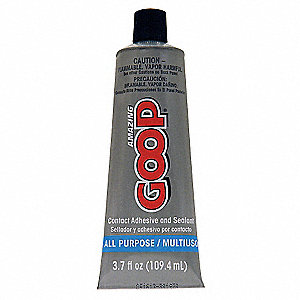
For years people have dreamed about something they could throw in a trunk and take out and fly on a whim. This plane was it!  Its durability was off the charts.  People discovered that simply using a thin layer of Goop on the leading edge made this plane bounce on impact.


All Purpose Adhesive,Squeeze Tube,Clear


One of my Bonsai's got challenged when someone ran into it with a heavy 4' Delta Wing going at full speed. The motor mount ripped from the back of the plane.  I was staying at a rather boring resort in Mexico with a friend when this happened and it seemed half the people at the resort watched this happen because I got questions about the next day.   Anyway, contact cleaner in the motor and a little CA adhesive and the plane was back at it.   Though it's not "perfect" it's 96% as good as new.  Which is great because HobbyKing has now made this plane a collector's item.

Bonsai II- Ruining a legacy


Image result for hobbyking bonsai 2

For the record, I don't own the Bonsai II.  It's a plane I wouldn't recommend.  Let's just say that promo videos showed people nearly crashing on each takeoff.  That was concerning.  So, let's call it for what it is, the Bonsai II is a small, unstable plane.  Even Matt Osborne called it out


What went wrong?


The design of the Bonsai was changed to mount FPV gear to it.  To balance out the addition of weight in the front the motor and servos were pushed further back.   What you end up with is either a tail heavy plane needed a bunch of weight on the nose or a properly balanced plane that's prone to tip stall and dropping wings.

Matt has figured out that the plane can be improved by moving the servos closer to the nose of the plane.


Why you should skip this plane


I am all for modding planes. Most foam planes can benefit from the addition of carbon fiber rods.  But when you have to make up for poor design before you even maiden a plane, that's nothing but a problem.   A lot of people want to get into RC planes and would be attracted to this plane because it's so small, light, and affordable.  Best of all, they can fly it FPV making the hobby more within reach of many of the drone pilots.  I am afraid that if this is your first RC plane, it may be your last.  it may seem counterintuitive but you're better off with the larger Teksumo.


Suggestions for FPV pilots


If you're hellbent on getting a 600mm wing that does FPV get the Blackwing  For the same amount of money you are into a plane that thrives on FPV.   It's slightly larger at 680mm and has a lot more foam.   It's a fast and compelling plane.


Thursday, June 21, 2018

Chinese made RC supplies- Price Hikes on the way?!?!


Face it, we're reliant on China.


Image result for made in china

As anybody who's been into the RC Hobby for least the past decade or two knows, we're in the golden years of the hobby when it comes to price and quality.   We're getting some unbelievable quality products at insane prices.  It doesn't matter if you buy it directly from China on websites like Banggood or if you go through your local hobby store a lot of what is being offered is being manufactured in China.  True there are other Asian countries like Taiwan, Hong Kong, Singapore, Malaysia, South Korea as well as perhaps a bit from Japan.  But the one that stands out the most is China.  A lot of the world's newest manufacturing equipment for everything from RC parts, electronics, and even the clamshell packaging it comes in is manufactured in China. We've come to depend on China.


Image result for large plastics plant in china


Simple law of supply and demand


The new manufacturing equipment is capable of turning out merchandise so efficiently, at low costs and beyond acceptable quality that the law of supply and demand kicks in.   There is far more supply than demand. If a small 9g metal gear servo costs $15 each you'll most likely buy a set for your next plane build.   If it's $150 each you'll most likely find a new hobby.  But when they are under $3 each you'll likely stock up in case you want to build a new plane sometime later this year.   It's because of this ability to supply far more than there is demand that the prices have stayed very low.

The two vendors I've been watching the most is Banggood and HobbyKing.   What I've noticed was that the lowest prices I've seen were around the holiday season.   In places like Australia it may be summertime, but for a good portion of the world people aren't out flying as bitter cold winters keep people indoors.

 When it comes to these seasonal lower prices I believe that a few factors are at work.  Retailers stock up on inventory for the holiday season, but realize that by mid-November that if Americans haven't ordered they most likely won't get the shipments before Christmas.  I also believe retailers like Banggood may slash prices because of low seasonal demand, and the need to reduce inventory before the end of the year.

C1 Chaser 1200mm Wingspan EPO Flying Wing FPV Racer Aircraft RC Airplane KIT

A case in point, the C1 Chaser is a very nice plane. Around the holiday it was selling for under $40 including shipping, now in the summertime, the price has gone up to over $60 including shipping here in the United States. That's a 50% price increase!

Another example, HobbyKing's Teksumo.
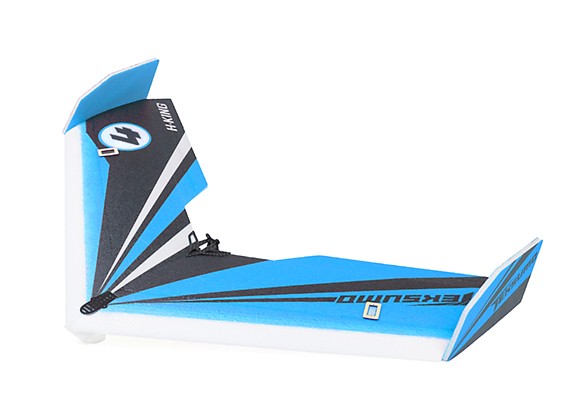
H-King Teksumo EPP Wing 900mm (35") (Cerulean Blue) (Kit)
This plane has traditionally been in the high 30's and low 40s.  It's now $50  sold and shipped in the United States. During the last holiday season, it was listed in the low 30s and was closed out in the old Orange color at $28.

The price has been in the $50 range for the majority of the year which means one of two things.  First, people are paying that price.  Or second, they have a fairly good inventory building up and will cut prices after summer and especially toward the end of the year.


The increasing prices may be a sign of an improving world economy and an increase in demand for RC products.  The US dollar to Chinese yuan has been changing.  The yuan has been gaining in value which means that it takes more US Dollars to buy the same Chinese made product as it did just a little while ago. 

As consumers, you're frustrated with the higher prices. But the retailer may not be keeping more money on there end either.   The differences are quite literally lost in financial transactions of changing dollars to yuan.

I don't believe China has a supply issue with many aspects of our hobby.    Most of the products made in China such as brushless motors and servos are to the point where they are commodities.   I've seen them sell out from time to time only to be restocked again within a week or two. If the world demand for 9g metal gear servos doubled overnight I have no doubt that China could figure out how to meet the demand. There are many factories in China all hungry for orders. EPP/EPO foam planes may be a different story because they are CNC machine cut.  These are usually made in batches and I've seen where a sale item puts the major online retailers out of stock for weeks if not longer as more production is scheduled.   I have noticed a definite price creep in EPP and EPO foam planes since the start of the year.  The good news is that our hobby is growing worldwide. The bad news is that increased demand is hitting us in the pocketbook.

Image result for trade war


The possibility of a US/China trade war.


China and the United States are the top two world economies.  China has more citizens than the United States but sells far more than it buys from the United States.  This is a huge issue for the current US administration.  They started to focus on Solar Panels made in China, and Chinese steel sold in the United States to put additional tariffs on.  China said they would retaliate by doing the same on US products.   Also at issue as well are violations by Chinese companies of international patents and allegations of currency manipulation.   Ultimately, what this all means is anything from a war of words that ends with a new trade deal in a few weeks between the US and China all the way to starting a worldwide recession.   Anything is possible, nothing can be accurately predicted.


Are prices about to skyrocket?


Are the prices of RC products going to skyrocket if you're an American?  Doubtful.  But the combination of a strengthening yuan combined with potential new tariffs along with higher demand for everything RC could spell out higher prices for RC products in the next couple of months. 

Suggestions


We're in peak season for demand.  Even the sales prices aren't all that special. The US midterm elections are in November and a heated trade war with China wouldn't play out well on election day.   My feeling is that unless you can find a sweet deal on a Chinese made plane this may not be the time to buy.   Perhaps it's time to check out reviews and consider what models you would like to add to your collection toward the end of the years.  I believe that RC planes are price sensitive and the higher prices on our end will be met with less orders. 

You may live in a country where the value of your currency is gaining over the yuan.  In that case things may look wondeful for you for the rest of the year.  Still, I expect that the best deals will be during the holiday season.

This is a good time to check your supply of consumables such as props, speed controllers, receivers, batteries. and servos.  You may want to keep enough on hand to keep you going for the next six months.  The prices on these things don't seem to have fluctuate as much as they have on foam planes.   Just keep a healthy inventory should supply issues arise.


There are other countries than China


Things like motors, props and batteries come out of China.  But, there are foam planes that come from all over the world.  Hacker makes planes in Czech Republic (I love their products!). I've seen planes made in Malaysia and Vietnam.  There are also regional plane makers. In the United States there are custom planes by Sweep Wings, Crash Test Hobbies and one of my favorites, Flying Foam.  There are also DIY plane instructions for planes made out of Dollar Tree Foam.  And let's not forget 3D printed planes. This may be a good time to find alternates for just the foam of the plane as the other components of the plane seem to be readily available from China at prices in-line with what they normally are.
I have also noticed that companies like Horizon Hobbies have put certain models on sale.  You can always check around for a good deal. 
Image result for balsa wood plane kits

If you're so inclined there are many balsa wood kits (and pre-made planes) sitting on shelves gathering dust that can be purchased fairly inexpensively by private parties looking to clean out a garage. 

One other thing.

Don't be surprised if the yuan takes a sudden nosedive.  Let's just say that China knows how to keep the value of its currency low.   But I would expect this to be more reactionary the preemptive. 

There are way too many moving pieces. I don't expect that a trade war would go on for a long period of time, but it could be something in the news for the rest of the year. Just get ready to ride this one out.  This may be a good time to get around to building those kits sitting around in your garage or selling off the ones you don't want.   This is perhaps a better time to fix or update planes that need attention.

Just keep a few props from each size you frequently fly and on hand and a spare battery in your favorite size on hand.   You never know if a labor strike or issues in transportation could conflate the already sensitive forces in play.  This is not a time to hoard Chinese merchandise but it is time to keep enough supplies around ( a six month supply) in case the supply chain gets interrupted. 

Monday, June 4, 2018

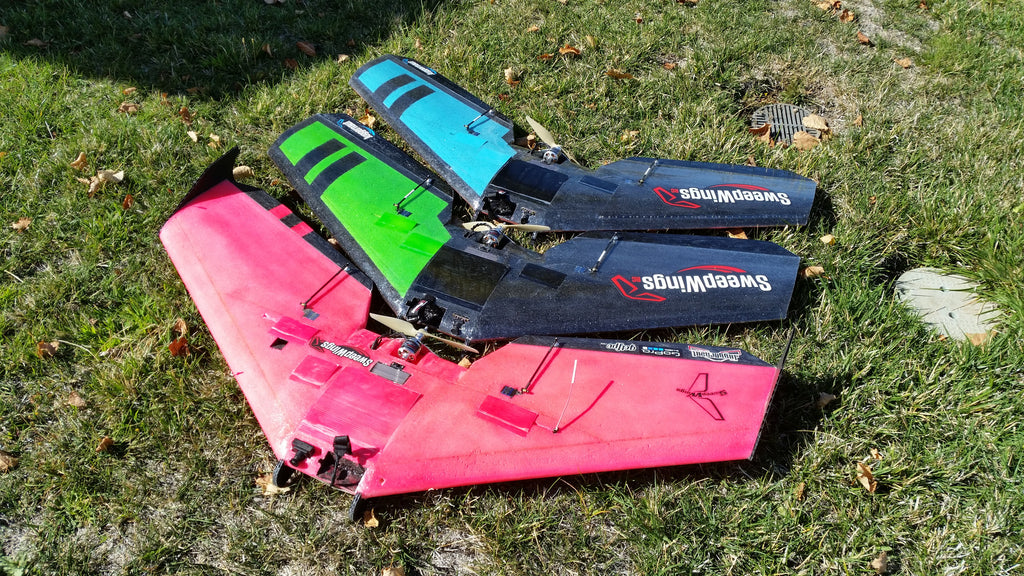
Sweepwings Juggernaut Build Videos


Related image

Going off script

The following is information about a series of videos I have recently posted on Youtube.  This covers the Sweepwings Juggernaut but it is applicable to other wings.  There are foam kits from companies like Flyingfoam.com that come as foam cores and it's up to you to make them into a plane you desire.  The key to success is making sure that the plane balances on the CG.  If you start throwing heavy motors in the back you'll need to put disproportionally more weight on the nose.  So, it's best to start with the lightest motor that can offer the grams of thrust the plane needs. This is the route I went with the Juggernaut.  I went for a very light and floaty build with a large propeller.


At a recent visit to a world-class hobby store, I became fascinated with a blunt nose plane.  The guy who built it said that he couldn't get it to fly.  He put 2  6S batteries up front and still couldn't get the CG right.  The plane was old inventory and they cut me a deal to pick up a model that they felt was missing parts. It was the same kit as the plane hanging, and it was up to me to make it fly.

What I didn't know at the time was that I actually got my hands on a great plane that is very much sought after.  It was the Sweepwings Juggernaut.  The problem with that plane is that at face value I have no interest in it  It's too heavy and too loud for the way I like to fly.  But, the one thing I believe in is that when you buy  a plane it's yours to build off script.  There in the hobby store I started to figure out how I would build this plane to suit the way I like to fly. I like slow flights that catch thermals.

This is hopefully an interesting series of videos.  I wasn't certain by the time I was done how it would fly or if I was wasting my time and money.   I did state up front what I planned to use it for, which was a video platform.  On the maiden flight I had taped on elevons and a 3oz fishing weight tied onto the nose. Okay, so it wasn't exactly top shelf, but boy did it ever fly nicely!

In the first video I go over the idea of the plane and discuss how I plan to cut the foam.  I show the markups.  You can tell the hesitation in my voice, I didn't know if this was too much.  At first I planned to cut 2" of foam off the back, I ended up cutting off 2.5 inches.   There is a battery bay that sits towards the front of the plane. To use it you would need to cut out a good portion of the foam from that part of the plane, leaving a huge hole.  I figured that I would rather have less foam in the back, and get the motor closer to the CG mark.  I am not a fan of cutting foam for battery bays.


In the second video  I do the cuts and go over spar placement. I used a Dremel Tool with router attachment (it wasn't shown in the video).  There were only a couple of minor nicks but the spars were covered by duct tape along the leading edge.

Since I didn't cover this in the video I will here.  I used duct tape all along the edges.  I used no strapping tape, nor did I use paint.  When I watched the build video on the Sweepwings website they painted their wing.  It looks lovely.  I used to spray paint EPP foam planes.  Now I avoid it because the foam collects pools of paint in the valleys of the foam.   You often need multiple coats to make it look even and what you end up with is something heavier than you may have imagined. So, that was a no go.  Also the fiberglass spars are a no-go.  I am sure they are fine but I have a lifetime supply of carbon fiber rods so I used those instead.   Aside from the duct tape on the edges I used no strapping tape.

The kit came with 5 mil lamination.  I have a good supply of this as well, but I used what the kit came with.  Some people don't care for lamination.  I can't live without it. It reinforces your plane and cuts down on drag. I also used a little bit of black Ekonokote to make a simple black and white plane.

In the third video I go over the parts of the plane.  The plane came with a nice 2" elevon, but I went with a three inch one I found at the hobby store.  It makes the plane appear larger in the sky, and perhaps helps give it smoother turns.


Here's a list of the parts I used.

Motor:  BR2212 1400KV ( I keep calling it 1450kv in the videos, sorry).  So, right off the bat you're probably wondering  why I am putting on a $5 motor onto this plane?   The motor runs 2-4S and has more than 900g of thrust.  To get to the next level of performance I would need to move into a D3536 1250KV.   That would allow for another 200 or more grams of weight in the nose.  This may be a possibility in the future for aerial photography. The problem with adding weight is that the dynamics of the plane changes considerably.  It will need more airspeed to not stall. Realistically, I would move to a 3 bladed propeller before changing out motors.
For a cheap motor I have never burned out.  They are actually rugged and well made. There is the DYS version of it for a few dollars more.  That with a 40A ESC and a 9070 propeller would probably give around 1100 grams of thrust for a short period of time.  The DYS offers thicker wires and probably can withstand a bit more abuse.

EMAX ES08MA II 12g Mini Metal Gear Analog Servo- A plane this size is better off with metal gear servos. The one thing I will say about these servos was that one control arm didn't fit on the servo, and it really had me worried for a while.  The other two did work fine.   These servos may get replaced before the motor does  Since this is a plane for video I will put on a gyro/stablizer on this plane.  I plan to use a good one.  They tend to work fairly fast and digital servos would most likely help to keep the plane floating smoother.  The digital servos are around 20% faster. I don't know how much of a difference it would make. So, that's wait and see.

30A ESC- I used the Skywalker 30A ESC.  I seem to have good luck with them

On this plane I am using a Hitec Optic 6 FM transmitter with dual conversion receiver.  This is old technology.  But, let me tell you, it received the signal without dropping once from half a mile away.  So, yes, it's good.


The final video was the maiden flight. I was flying close to the ground for a few minutes trying to get the video while flying the plane.  Then I shot it up and found a thermal.  This was a somewhat weak thermal, it did have lift though not as good as what I see in the summertime.  Regardless I think it got to around 700-800 feet for a short time. Usually, at these altitudes, a plane gets bounced around quite a bit. The Juggernaut held together nicely offering a smooth flight in usually harsh conditions.

Blunt nose wings are all the rage these days with a lot of emphases on them for FPV flying.  The one thing I have noticed is that it seems to offer a smoother, more stable flight than a standard Delta Wing of the same size.   If you're a fan of the Reptile S800 and the Sonicmodels AR blunt nose planes and wanted to venture into a four foot plane, this is an excellent choice.  Yes, they are fairly expensive but each wing is cut by hand.  This is something you'll probably have for years and the extra money is well spent.


The fun of buying used planes

  If you like to buy and sell used planes.  Occasionally you can find really good deals. I mean, mind blowing deals.  Most of the time you d...