Thanks for visiting! We're about RC Planes, primarily electric foamies. There are reviews on models commercially available, building techniques, and suggested modifications. We review planes from Hacker, Dancing Wings, Parkzone, Turnigy, Flyingfoam. Sourced from Banggood, HobbyKing, Hobbytown USA, OmniModels,Horizon Hobby, Tower Hobbies, eBay & Amazon.
#RCPlanes #RadioControlledPlanes #Foamies #Foamplanes #EPPFoam #NewbieRC
My goal with a wire connection is one that it is not only connected 100% of the time but one that is strong and protected from the elements. The issue of having a strong connection comes with the fact that the battery may pull on the connection in cases of crashes. A very fast, and simple connection would be to simply use wire nuts. If I were to use batteries with different connectors, one with an XT60 connector and another with a JT connector I would be tempted to use wire nuts because I could change out the connectors before the speed controller. But, that's a bit more work than it's worth. I would also worry about the connection over time as the wires would be bent onto each other over and over again. I also do want some protection from the elements and most importantly to ensure that there is no way the positive and negative wires would ever touch.
Talk to any old-time electrician and they will swear about soldering. Soldering a 10 gauge wire to a 16 gauge wire is something that they have no issue with. I do because that 10 gauge wire takes a lot of heat to heat up and at the ranges hot enough to melt solder it also melts the insulation around the wires. A good crimp is a close second. If you gauge effort, time and the final results there are many who swear by crimping.
100% of the time connection
My Radian had a slight electrical connection issue. There was a connection between the battery and speed controller that would fail if the wire was twisted in a certain way. It was super easy to fix and worked most of the time. Perhaps this little issue wasn't worth worrying about? Of course, you never can really tell when a connection would fail. Maybe it would be just momentary and the servos would bounce back on once power was restored? The motor wouldn't be ready for at least 10 seconds as the speed controller goes through its fire-up song. The good news is that no matter what the plane would soon be back on the ground, most likely in a debris field. I know that "Build, fly, crash, repeat" is our motto. Yet, a little extra caution will decrease the down time.
The problem-Different wire gauges
My preferred crimping method
The cheap plastic crimps mainly from China are fine for some applications. If I were wiring two pieces of speaker wire together inside a house it would be fine. I would simply make certain to keep the insulation inside the crimp to prevent shorting. When you put a heat shrink around it the heat causes the plastic to bend back to its normal round shape. And then there's the issue of wire gauges which are different gauges. The connection of the thinnest gauge will always be suspect. For connections, if different gauges, ones that will be exposed to the elements I use non-insulated step-down crimps. The step-down crimps can be found in many different flavors, insulated, non-insulated, and ones that are heat shrink crimps. Sure they are more expensive than the bag of 100 crimps for $5 but they work all of the time. Putting heat shrink around them doesn't affect the crimp. For what I have found it's the best solution for getting it right the first time.
Seriously, have we learned nothing from Aaliyah? First things first, who is Aaliyah?
Aaliyah was destined for greatness. She had so much raw talent, beauty and drive behind her that she probably would have been a household name today. Her song again "Try again" is kinda my theme song for building RC airplanes. I can't tell you how many times I've dusted myself off and tried again.
Unfortunately, Aaliyah died just as her career was starting to take off. She died on board a twin-engine Cessna 402B on August 21, 2001. Since this was a very long time ago we know exactly what happened. The plane was overloaded by a mere 700lbs.
Though she's not the first rock star to die in a plane crash there is something so basic about her story that can serve as a lesson. The weather was fine, the plane was working well, the pilot was capable of flight, there were no real problems to speak of. In very basic terms, the amount of thrust the engine could produce wasn't enough for the amount of weight this plane was carrying. When you do this with a car you throw a rod and then stand by the side of the road waiting for Tripple A. In planes the plane returns back to the ground.
So, what does this have to do with your radio controlled airplane? Everything. And I do mean everything. If you call me up drunk in the middle of the night stating that you're at the tattoo parlor and short of inspiration and you can't decide between a skull n' crossbones or an L.A. Dodgers tat and you ask me for my input, I would say put the letters G.o.T. on and if you got space C.o.T. There is so much truth and wisdom in these letters are things you will need to remember all your life.
G.o.T. (Grams of Thrust)
By now you've seen more than enough videos of people hooking up outrunner motors, a prop and a simple weight scale. They let it rip and shout out the Amps and the number of grams. One question remains, what the hell are they doing, and why should you care?
What's he using, a Hitec?
Tangent time: Let's be honest. The notion that you can fly your little radio controlled plane miles away from where you are is exciting, right? You think about flying a plane ten miles away via a 5.8Ghz transmitter and you're standing in the middle of a field somewhere looking like Doc Brown from Back to the Future with white lab coat and antenna on a tripod with a small video screen that shows the video feed from the plane. Okay, I have to admit that this is cool. But, when you really start to look into what it takes to do this, it's a lot of weight. Thus the planes that do long range FPV are usually fairly big and heavy. Once again there's that weight issue creeping up. All your small, light planes won't work for this scenario, at least not now. The technology is improving and the gear is getting smaller in each generation. But the weight is the fundamental issue because as you add more gear to your plane, you'll need more thrust.
The SkyWalker is a famous FPV plane
The third question you should ask yourself when you're looking to buy a new plane is "How much is this thing going to weigh?" The first question is "How much does it cost?" The second is "What's the wife going to say?"
Start with weight
What's the right motor, ESC, prop for the plane? All good questions, but not as important as "how much does this plane weigh when I have all my stuff on it?" If it's 500 grams than you need a motor and a propeller that are capable of producing 500 grams of thrust. This isn't the goal, it's the bare minimum. If you want some really cool performance you'll need one that can do 1.5 times the weight (750g).
Consider amps and the battery
Information is all over the board on the internet about various motors and propeller combinations. Usually, they are 2s (7.4 volts) or 3s (11.1 volts). Perhaps you'll get lucky and find that someone has done the work for you in advance.
Here's a video for an example. This can be found for under $20 including shipping. It weighs less than two ounces and can produce 1.2 Kg of thrust! That's enough to comfortably get a 2.5lb plane into the air. It will need a 40 amp ESC along with the 7x3 prop. This is running off of an 11.1v battery. This would be fantastic for an 800-gram plane. That would be around a 28-ounce plane. That is 28 ounces when the plane is finished, with all the gear on it. You need to add up the weight of the servos, motor, ESC, and battery. Oh yes, you can use lighter batteries if you're getting close to the weight limit. The trade off is that these lighter batteries have fewer milliamps of power. They will put out just as much power (11.1 volts) but will do it for a shorter period of time. The trade-off for less weight will be shorter flights.
FPV is one of those buzzwords in the industry. There are park flyers that can do FPV They can go short distances and produce so-so results. I expect this to get better in the future. If you want to go long range you'll need excess battery power, which means more weight. Which means a motor that can handle the larger weight. This usually is a stright line to a larger, ugly plane like a Skywalker.
Speed Controller
When you figure out the prop, motor and battery combination the last piece of the puzzle will be the speed controller. You'll know the total amps required for the plane. You'll need a speed controller that can easily handle the amount of energy required. In the example above the first prop and motor combination drew 32amps. So, can you use a 30 Amp ESC? I mean 32 amps is almost 30 amps and you won't be flying at full throttle all the time, right? My rule of thumb goes like this. Take 20% of 32 amps (6.4 amps) and add it to the 32 amps. That's 38.4 amps. A 40 amp ESC will work. It will work great, and you won't have to worry about it. Perhaps the 30amp ESC will work fine. There are a lot of variables. Is it exposed to cool air? How long will it be used at full throttle? One other question you may wonder, and I don't know the answer to this. What happens after a speed controller fries and your plane is still in the air? Do the servos still work? If not you've saved a few grams, a little room in your build, and a few dollars. If you have a dead plane in the air you're responsible for whatever damage it does and you're not going to be happy with the way the plane lands.
C.o.G.
The second tattoo I would suggest would be C.o.G. Before you get a plane in the air you'll need to know what the Center of Gravity is for the plane. If you've got a plane capable of producing enough thrust for the weight it's carrying, and everything is together, just make certain the plane is balanced at the center of gravity. In retrospect, Aaliyah would probably still be alive today if the pilot simply would have done a few more calculations. The one thing I have learned from experience in life is that pushing the limits usually works in your favor 99 out of 100 times. You can speed on the freeway, you can run yellow lights, you can drink milk past the expiration date. But, it's that 1 time out of 100 that people never forget.
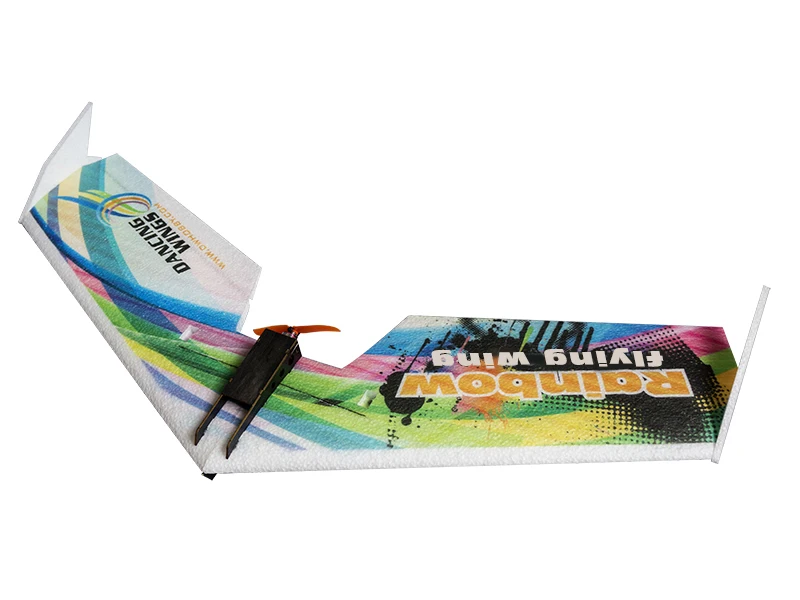
Today the internet is exploding with foam Delta Wing kits. For under $20 on BangGood.com you can get a foam plane sent to your house, minus the electronics to make it fly. There are other Chinese versions sold at HobbyKing with the Turnigy Bonsai and TekSumo being the fairly popular. There are even some Delta Wing Planes from Poland sold under the Hacker Evo line. Of course, version one goes back to Southern California with Trick RC's Zagi line of planes.
The Pro's and Cons of the RC Plane Delta Wing
Pros
Simplicity- Most versions this plane are a pancake body with winglets. For the most part the plane is two-dimensional, length and width. You don't have to worry about knocking off the rear tail, it doesn't have one. There is no rudder, nor elevators. Just two ailerons. Set your speed and you can fly it with one hand. The glider version of this plane only needs a two channel radio.
Durability- Because it is, for the most part a one piece plane it's unbelievably durable. It's a good plane for beginners because there aren't a lot of moving parts. By design it can handle crashes well. There are combat versions of this plane designed to do air battles by crashing into each other at high rates of speed. The real winning factor for beginners is the prop in the back of the plane not enduring damage when it crashes.
Easily modifiable - You can throw extra support by way of carbon fiber rods in the leading edge, you can grossly overpower the plane with motors too large for it and still get it to fly with the proper C.G. balance. I've even seen one mod where someone put plywood at the bottom of a delta wing to give it even more support.
Cheap- With versions you can make yourself for around $2 using foam found at Dollar Tree this plane design tends to top the list of affordable planes that are easy to aquire. If your dreams for designing your own foam plane quickly outpace the designs you find online you can design your own Delta Wing online for free.
Easy to fly- Working independently the ailerons turn the plane left or right, working together the plane goes up or down. Thus the right stick (mode 2) more or less fully controls the flight of the plane and the left stick (mode 2) controls the throttle. This is about as straightforward as it gets.
Cons-
Harder to see- The plane when coming right at you is difficult to see at times, especially from a distance.
Limited glide characteristics- A two-meter foam wing glider like a Radian or Pheonix 2000 can enable very long flights with minimal battery usage. These things can float, and float and float for very long periods of time in the air. The delta wing design isn't as graceful in the air. Sure there are certain builds that glide better than others. A light weight and larger surface area can certainly improve it's gliding characteristics. But it's like comparing a sports car to a utility truck. Just because one model has a larger trunk doesn't mean it can haul drywall.
Smaller versions can be "squirrely." The fun of the plane is making it do barrel rolls and loops. The smaller wingspan version such as the 24" Turnigy Bonsai can be a bit more difficult to handle. Perhaps this is why experienced pilots love putting extremely fast motors on these planes and pushing them to 100 MPH. They are more challenging to fly at higher speeds. But, if you got a need for speed and a smaller budget this is the solution.
The Stealth Bomber
There are a number of Delta Wing planes that have and are being made in general aviation. When you think of the Stealth Bomber it's conjures up feelings of state of the art technology. Perhaps someone as a child was inspired by a comic book spaceship and turned it into reality? Actually, the idea is very, very old and has nothing to do with comic books.
Pusher Prop Delta Wing
The pusher prop delta wing planes actually exist. The Navy was experimenting with them back in the 1930s. Here's one that was recently shown in Chino.
Of course, if you have the money, the time, and desire for a thrill this real life kit plane can be yours. It's a wonderful delta pusher prop plane.
One day you decide you need a very short USB cable, 12" to be exact. You go on Amazon and they will gladly send it to you in the next couple of days for around $7. But then you start thinking you do too much of your shopping with Amazon and besides it's not an emergency, perhaps you can save a few dollars? You go onto eBay and find that most people want $10 for the same thing, but they'll get it to you slower.
And then you find it.
$1.88, free shipping, from China? What? You think about it for a while. You start to have visions of an old grandfather in Shanghai yelling out to his grandson in the next room to get "the cable" because it's sold The grandfather neatly applies the label to the plastic envelope, kisses the cable and closes the envelope. A 44-year-oldboy grabs it and runs out of the house down the street to two guys standing next to a motor cycle. They do the handoff and the two guys book it through busy downtown streets to the marina where they briefly argue with the guy who is about to close the last container. Then it takes a couple of months to make it's way to the Port of Los Angeles where it sits in customs for a few more weeks. By the time it finally gets to you it takes you a moment to recall ever ordering it.
The reality is in most cases it will show up in a couple of weeks, if not sooner. Depending on what you order the quality may actually be very good. How does this happen?
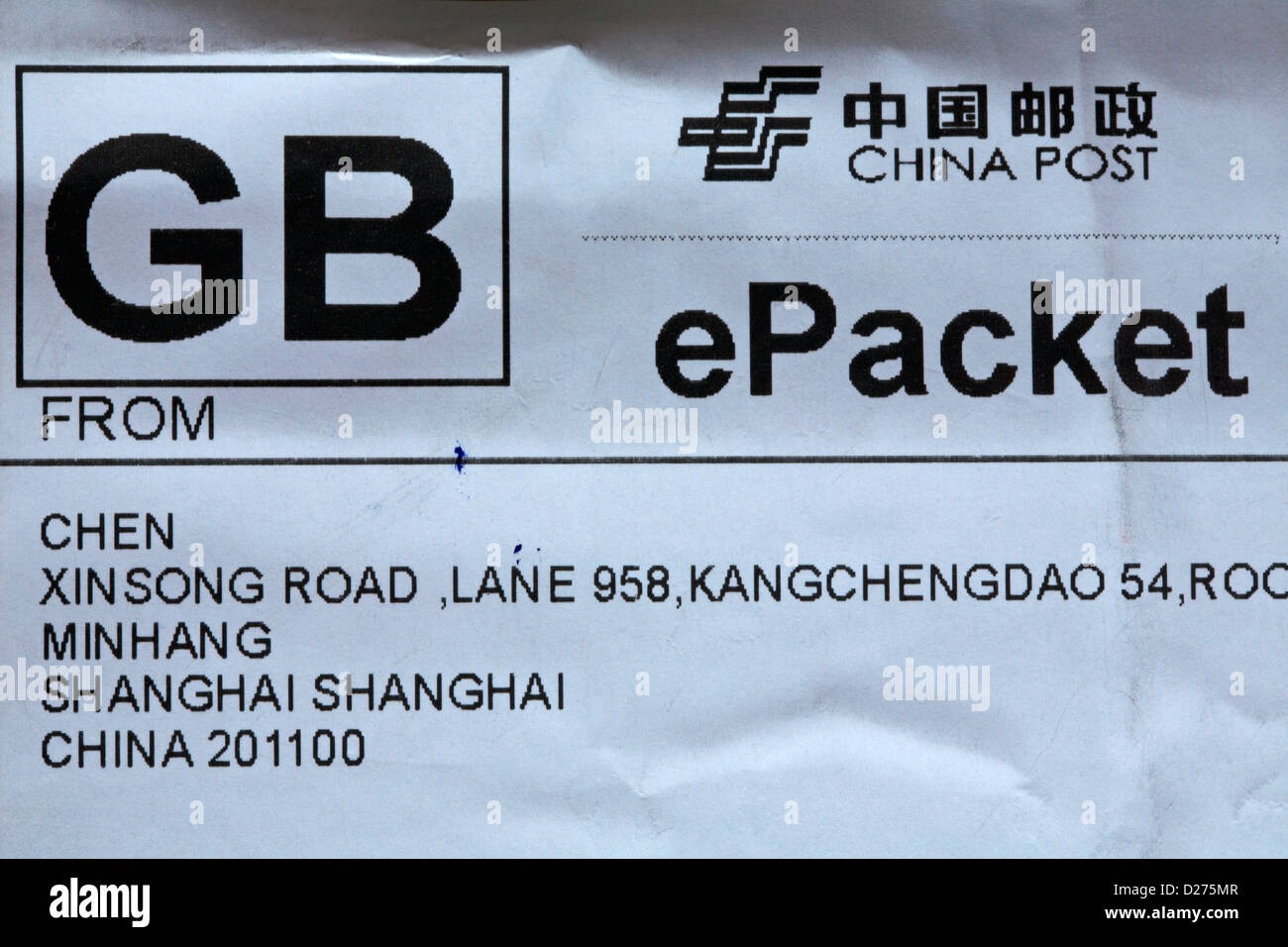
ePacket Mail
Usually these are larger companies you are dealing with who are trying to make a name for themselves online. The package has only one carrier, the United States Postal Service. There are insane rates from China which are fantastic, for about the first few ounces. Then as the package gets larger and heavier, well unless you're interested in buying a container load of the product you may as well forget about it. The shipping rates and customs issues make it far too expensive to purchase. ePacket Mail is the same thing as First Class mail which means that anything over a pound needs another shipping method. Thus, if you are buying something that is small and light and can wait to get it you can save a bundle buying from China?
How's the quality, really?
Big picture, China has some of the most state-of-the-art remanufacturing facilities in the world. They can deliver unsurpassed quality or pure junk. It really depends. I find that the more complex something is, more moving parts, or a combination of electronics and mechanical form, and the lower the cost, the worse it is. But, simple little things that usually are cheap and don't weigh much such as a USB cord are fine.
HobbyKing, Turnigy and Durafly
HobbyKing own the Turnigy and Durafly brands, all these brands including HobbyKing fall under the Hex Tronic Ltd. label of brands. Hex Tronic is based in Hong Kong. Tower Hobbies on the other hand is an American owned company that sells in this ever-increasingly competative market. Check out how much out-runner motors cost at Tower Hobbies versus Hobby King.
HobbyKing, China warehouse
Since this is an RC planes devoted website I will talk about a large RC vendor known as HobbyKing. They have warehouses in Europe, China and Portland, OR. If you look on their website you'll see something selling for $49 and you think "That's not bad. I can afford that." After close inspection, you find out that $49 is the price at the China Warehouse. If you buy it from the US location it's $79 and then there's shipping. I made the mistake of trying to buy something all from the China warehouse. I felt that I was saving so much money that I could afford to spend $50 on shipping. And then the shipping was calculated. $250. Shipping would have tripled the cost of the order! On another order I was monitoring the cost of shipping from China, it was only $6. When I put on a simple $4 t-shirt onto the order the cost went from $6 to $35. Ah, I didn't need the shirt.
BangGood.com
Bang-Good sells planes, drones, FPV, and all the parts you need. They also sell fashion accessories, HBA, home and garden, automotive, and a ton of other things. They somehow can ship merchandise that weighs more than a pound for free. How? I have no idea. My gut feeling is that they are willing to lose money, lots and lots of it, just to build a client base in the United States. They do have some warehousing in the United States on various things such as lighting.
Things always seem to be on sale so a good deal can be an even better deal depending on when you buy. There are people who review the items they buy on their site and they don't seem to filter out the bad reviews. Thus, you can get a pretty good idea of what is going on from the reviews. Shipping seems to be fairly reliable.
What does the future look like for China selling directly to American consumers?
We all know the POTUS isn't a fan of China. Unless Tump can cut a good deal with China where he comes out looking like a superstar you can pretty much assume things from China will get tarrifs and higher prices. I can't see things ever getting cheaper than they are now. You may want to stock up all your cheap Chinese goods now.
Batteries tend to work in a similar manner. It's a chemical reaction in the cell that creates electricity. Here's a good, simple movie about how batteries work. It explains both how one use cells and rechargeable batteries work.
Lithium based batteries.
Chances are very likely that you have many lithium-based batteries in your home right now. Lithium ion batteries power your cell phone. laptop computers and other devices. Chances are very likely that you've never had any real issues with these batteries other than they die and they are difficult if not impossible to replace.
But, you should beware You remember the houses burning down a few years ago due to hoverboards catching fire? Then there was the Samsung Note 7 that was banned on all commercial air flight because it too would catch on fire when charging. At least it was known to happen, here and there.
And speaking of things that are hard to explain, why are the airlines so paranoid about this phone? Do you remember the Malaysia Airlines Flight 370? 239 souls lost at sea, bits and pieces of the plane were found washed up on beaches thousands of miles away from where it was last seen. Among the many conspiracy theories was one that I found, well, perhaps credible. There were 500 pounds of Motorola Walkie Talkie batteries on the plane. Here's the whole scenario. At the center of the scenario is once again, Lithium Ion batteries.
Lithium Polymer batteries are simply a different version of a lithium battery. The polymer is essentially a form of plastic. The great things about polymer batteries, they are light, they are cheap and they hold a lot electricity. I mean, A LOT OF ELECTRICITY. The new chemistry makes them more volatile.
Not your farther's NiCads
One of the largest problems with LiPos are that people treat them like NiCads. It's a new chemistry and a new learning curve. There is a lot more care that needs to be taken with these batteries. You certainly need to tend to them a bit more than NiCads if you want to get the maxium life out of them.
The Storage Mode
If you learn nothing else but this one thing, it would be to do a storage charge with the batteries when you're not using them. It doesn't matter if it's for a drone, a plane, car or boat. The batteries need to be stored properly when not in use. The storage charge is somewhere around a 50% charge. DO NOT FULLY CHARGE A LIPO BATTERY YOU"RE NOT PLANNING ON USING IN THE THE NEXT 24 HOURS.
Exhausted LiPo Batteries.
It's best not to run your batteries into the ground. Many speed controllers have a built-in battery check that shuts off the motor but leaves the servos working when the batteries get to a certain level. Though this may be helpful in keeping your batteries from being exhausted, it can very much suck for you if you are not ready for the loss of power.
LiPo Battery Low Voltage Tester/Buzzer
If you can find space for this, these things are amazing. These things monitor your LiPo battery. They give you readings for each of the battery cells. If one of the cells hits a certain level, say 2.5 volts the battery alarm sounds off. The thing is freaking loud! Can you hear it a couple of hundred feet up? Yes. You can fly until the alarm goes off and still have power to land. You can order it directly from Banggood. You get two for $5 with free shipping, such a deal!
About Charging
When it comes to LiPo's I don't believe in fast charges. Just simply charge your battery before you need to use it. Follow the recommended proceedure for charging your battery with the charger. You will need to use a charger that is designed for charging LiPo batteries. Charge and use the batteries. If you charge and don't use the battery take it and put it on your battery charge and give in a storage charge anyway. There are resistors in the battery charger that will take down the charge to half charge. The charger will get warm. That is your batteries energy being converted into heat.
Charging versus a "balanced" charge.
Each battery is rated by an S The S stands for series. For example, a 3S battery is a series of 3x3.7 volt cells. You can almost think of each cell as a stand alone battery that are connected to each other to give 11.1 volts. If you give it a normal charge and use that nifty battery voltage tester above you'll see some cells have a slightly higher voltage than others. What the balanced charge option does is make sure all three cells (in the case of an S3 battery) have the same charge. It does this by a series of charges and discharges of the cells until they are all equal. A balanced charge takes longer to charge because of the cycles of charging and discharging until they get to equal levels. If you charge your batteries the night before things should be fine. My rule of thumb is, whenever possible, do a balanced charge.
Charging unattended
You've charged your cellphone overnight. You've left your laptop charging for days, often leaving the house for many hours. So, what's the big deal with leaving your LiPo batteries unattended when being charged? You're probably charging batteries with either 7 or 11 volts, not a lot of voltage, right?
Though I didn't want to bore you with numbers, in this case, please allow me to show you something. Look at the battery above. It's 2200 Milamp hours. In other words it's 2.2 amps. In theory it can output 11 volts at 2.2 amps for one hour. So, somewhere around 24 watts for an hour. Not impressive? The 50C means something. Multiply it times 2.2 amps. All at once it can discharge 110 Amps. That's one hell of a lot of electricity. The yellow XT60 discharge plug on this battery is hooked up to either 10 or 12 gauge AWG wiring. This is the same gauge range most of the electrical wiring in your home. These battteries are designed to output high amounts of electricy all at once. That's why you need to watch these batteries. They are storing a lot more electricity than what is in your cellphone. You don't need to hover over your batteries, but just the same, you need to be around.
Old/puffy or damaged batteries.
Batteries left charged for long periods of time are around the same as batteries that are left for dead for long periods of time. They soon get puffy. This means that it's time to take the to the e-recycling drive and let them dispose of them for you. The good news is that now these batteries are so cheap you can always get anohter for not a lot of money. If the cell gets damaged, especailly nicked, get rid of it. The potential for fire is too great.
The clay flower pot
I like this video because the presenter went out of his way to do stupid things with the LiPo battteries. No fires, no exploding sticks of dynamite.
One person has suggested getting a $3 clay flower pot from Home Depot and putting your batteries inside when they charge. He claims that any heat, fire or explosion could be contained inside the pot. It may not be a bad place to store batteries as well. Just make sure that nothing flamable is near stored batteries.
LiPo batteries of the future-
I don't believe that the RC hobby has enough momentum behind it to drive great changes in battery technology. But the one thing that does change the dynamic is the miniaturization of the computer technology. Within the next ten years the number of connected technology things in your life will increase dramatically. The one thing they will all have in common is that they will need to be powered by something. Smaller, thinner and even cheaper batteries will be needed.
As demand for batteries grows new ideas will come along I can see the batteries as pre-formed pieces of plastic that clip onto the wings of a plane that would have a simple power connect as a definite possibility in the next few years. It can be a clip on leading edge with a deck for mounting FPV gear.
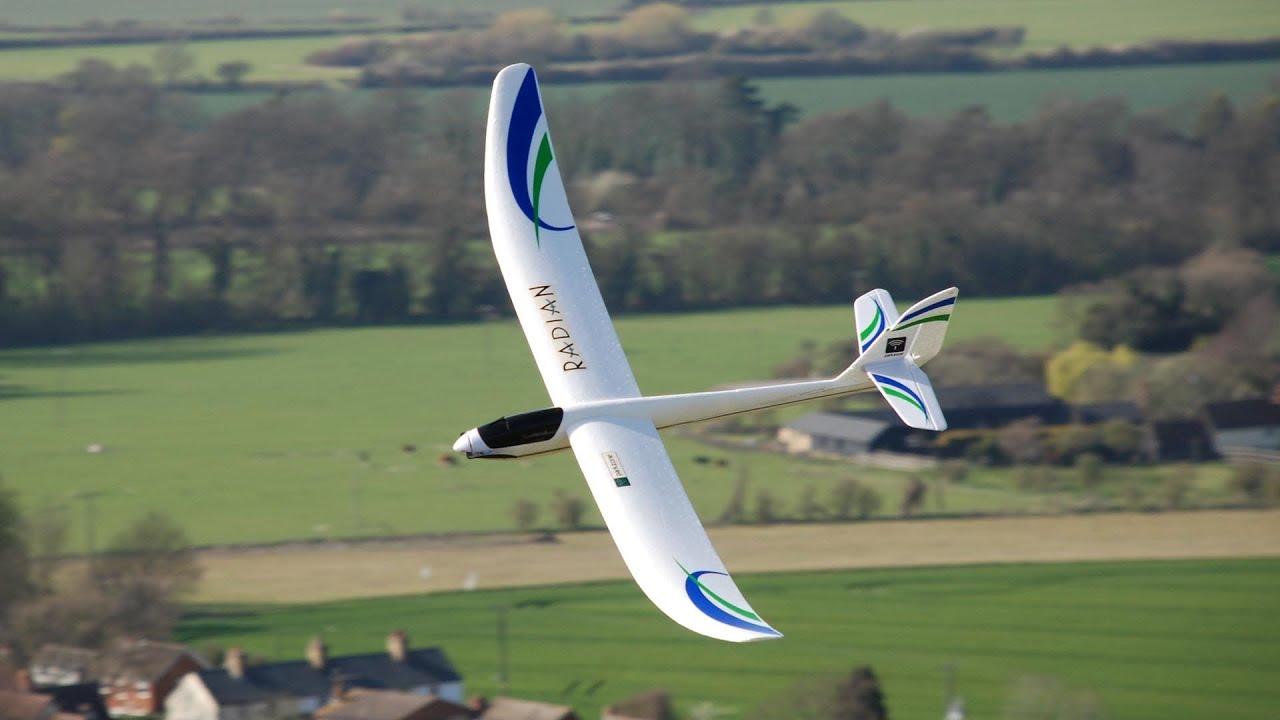
I found out about the Radian from one of my buddies. He's built over 1000 RC planes, many of them balsa wood planes. Now, the thought of getting a plane that he can carry in one hand in pieces while balancing an ice chest and folding chair in the other as he works his way to the beach is what he now desires. When I point out the many mods he can make to the plane he's quick to point out "It is what it is." Take it for what it's worth, it's a great plane.
No Ailerons
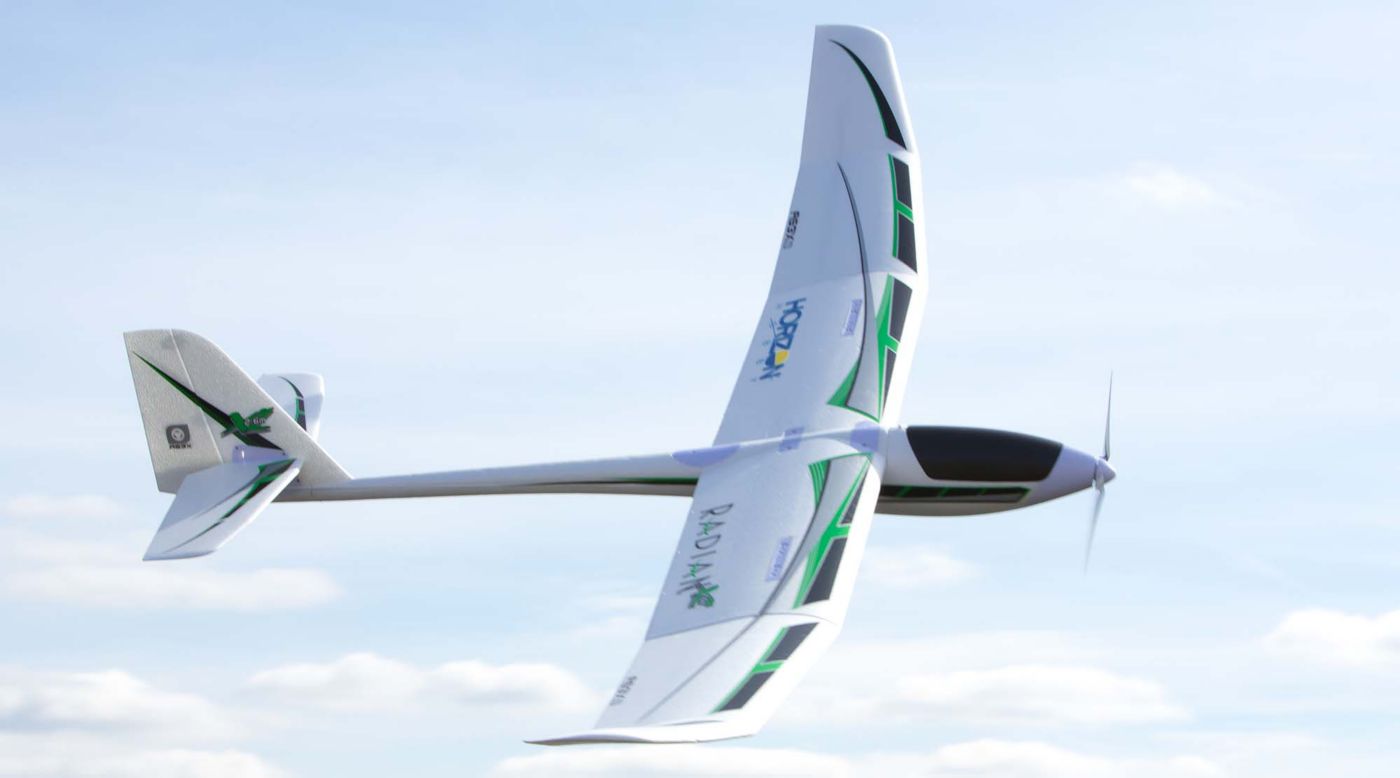
The swept wing helps keep it flying for long periods of time. But this is a rudder and elevator plane only. Yes there are videos on Youtube showing how you can put in ailerons, and strengthen the tail. The only thing that seems to be missing is them showing the plane flying after such modifications. Adding weight to the tail will change the center of gravity. There was a Radian Pro with ailerons at one point. It wasn't super-loved. If this is what interests you I suggest buying a Pheonix 2000. It has the cutouts already done.
The Radian is an up and down plane. You fly it up, and then steer it in circles back down to the ground. If you can catch lift the plane will stay up in the sky for very long periods of time. The plane is the In & Out Burger version of a foamy glider. It's nothing new, it's very simple, and yet in its simplicity, it's very special. I call it a "Buy it an fly it" type of plane. It needs to be flown on days with wind speeds under 10mph. anything more and it's not a lot of fun to fly.
Buy the kit?
I bought the plane in pieces. I thought the kit was too expensive. Though in the end I saved a few dollars, it wasn't enough to justify the savings. I figure the plane in the BNF is around $40 too expensive. I went to a hobby store and bought it in pieces, and then went back a few days later to get the rest of the pieces. I bought an appropriate motor only to find out that the mount only takes the Parkzone motor. Let me state that again. If you buy any other motor, you'll have to hack the mount yourself. I can easily find something lighter when it comes to motors, but then the COG will be off.
You're not going to lose a lot of sleep building this plane, maybe it will take a few hours of your time to get it together. It's very basic.
Had I known what I got myself into I would have gladly purchased the kit. But, with that being said I do know how to replace the parts on the plane should they break. I know for example if I replace the fuselage I should bite the bullet and replace the horizontal stabilizer at the same time.
Assembling in pieces, the rough sketch
The beautiful thing about the Radian is that there aren't many pieces. You'll need the horizontal stabilizer, the fuselage, the main wing, the motor, spinner, canopy and propeller. Then, you'll need the basic electrical such as a receiver of your favor, a 3s lipo and two 9 gram servos. The assembly manual is online and it's easier to follow than most. There is nothing difficult about the assembly. Perhaps putting the propeller on is the worst of it. There really is no perfect way to put the servos in so I epoxied them to the plane
You can buy the decal kit for around $5 and it's worthwhile to have because a naked Radian isn't that interesting. I've seen people paint them wild day-glow paint colors. It makes the plane look interesting, to say the least. You will need to center your servors and trim up your settings.
About the motor
The screw mounts on the front line up with the motor from Radian. There is a work around if you don't want to do this. You can buy a mount for $15 on eBay. From that you can plug in a few 35mm diameter Turnigy motors. You will spend more money doing this but you'll have a stronger motor. You may also have CG issues. Save yourself the hassles and buy the Radian motor. It's plenty strong to get this bird way up into the clouds.
Bind and fly
For $180 you can buy the kit with the a modern 2.7ghz receiver in it. You'll just need your own transmitter and a 3S lipo battery. I say for the average person who has made at least a few planes the extra money to buy the BNF is worth it. It will save you a few hours of work and in my case, a night of servos drying in epoxy. I bought the wrong motor for the plane, but I have other uses for that motor. Since I am still new to building planes I found the extra steps and the education I gained to be worthwhile.
My favorite line in the instruction manual
" With the current trend towards an eco-friendly society, thermal soaring is free energy and fits well with the environmentally conscious consumer."
Wow, the 8 cents worth of electricity you'll save by not charging your LiPo battery is going to really impress your green friends!
Recently I wrote about the death of Hobby People, a legendary chain of hobby stores. The internet seems to be eating the old fashioned brick and mortar retail store in all industries. In the article I rationalized that retail space is far more expensive than warehouse space. In order to justify the retail space you'll need to turn the inventory much faster than online, or simply sell more to each customer. As consumers we've all been in the position of not wanting to run to the retail store for an item that simply costs a few bucks. Let it show up in the mail in a few days, it's easier. And besides, we can shop around for the best deal.
But then one day it happens. You've got plans and just as you're getting ready something breaks. Perhaps it's a propeller or maybe one of your batteries has seen it's very last charge. Suddenly you don't have time for Amazon Prime or eBay. You need it now. Though it goes against your grain to take your time and gas money to go to the hobby store you do it anyway. If you're into your hobby this is your candy store. What should have been under a $20 purchase turns into $200 because you find something you simply fall in love with. Welcome to the last great haven for retail!
Hobbytown U.S.A. located in the newer section of Corona, CA (a few miles from the 91 or the I-15 is my local hobby store. It's a combination of the old world hobby store and the new online hobby store. The old world hobby store is one where odd and obscure parts are stocked for the serious hobbyist, sometimes to the point where they stick around for a decade or two. The new online hobby stores are light on parts and heavy on kits.
Hobbytown U.S.A. has an internet presence. You can shop online,24 hours a day at hobbytownusa.com. The price you'll find online is the price you'll find in the store in most cases. And with many of the things you'll find distributed from Horizon Hobbies, one of their main vendors there is no better price online. You will pay the going rate. What online provides you with is simply convenience
Going to a hobby store is always a fun experience. Among the highly stocked shelves are so many different hobbies that you'll find a mom with her 13 year old son who is upgrading to a 3S 5000mA LiPo battery for his RC car because he brought his grade up from a C- to a solid B in Geometry. Standing behind him is an old timer who is picking up balsa wood to repair minor damage to one of his wings on his Bi-Plane.
What you don't get online is someone behind the counter you can chat with. There is a difference between people who live and breath their hobby and people who work in the store. Since this is a franchise the owners are passionate about the hobbies they sell. You can see it in their eyes as they talk about flying fields and who is flying what. If you have questions, they usually have the answers.
The one thing that has also changed is a whole new breed of scumbag that is actively stealing mail and parcels in our neighborhood. I've had parcels stolen from my mailbox. When it comes to a handful of servo horns it only ads up to a few dollars. When you start talking about $80 motors and $200 kits than yes, it does worry me. One day my neighbor told me that the $100 baseball bat he ordered arrived. Well, at least the box did. Someone stole the bat out of the box on his front porch while he was at work. Thus, if there is anything of real value that I plan on ordering in the future I will gladly drive to the store and pick it up. Often they have stock locally which they can get their hands on in a day or two.
Overall, Hobbytown USA is a find and I am proud to call it my local hobby store.

 The step-down crimps can be found in many different flavors, insulated, non-insulated, and ones that are heat shrink crimps. Sure they are more expensive than the bag of 100 crimps for $5 but they work all of the time. Putting heat shrink around them doesn't affect the crimp. For what I have found it's the best solution for getting it right the first time.